Manufactured landscapes in diverse filmhuizen, o.a. in Focus [Arnhem]
“Het is mooi als het goed is, het is goed als het mooi is.” Dit Griekse gezegde is een uitgangspunt voor iedere kunstenaar die zijn hart wil volgen. Het ware, het goede en het schoone hangen wezenlijk met elkaar samen. Maar vaak is dat op een verborgen wijze. Niet iedere mooie buitenkant herbergt altijd goede inhoud en omgekeerd geldt hetzelfde. We moeten het ware, het goede en het schoone telkens weer zelf ontsluiten in de jungle van beelden waarin we leven.
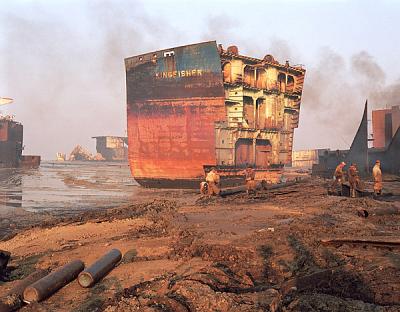
Chittagong, Bangladesh, 2000
De Canadese fotograaf Edward Burtynsky confronteert ons met industriële landschappen en laat ons de achterkant van onze welvaart zien: uitgemergelde bergen, vervuilde stranden, stervende bossen. Hij toont ons de esthetische kant van onze vervuilde en stervende aarde en brengt mij daarmee in verwarring. Stond ik niet helemaal achter Al Gore en verzette ik mij niet tegen dit ‘grote sterven’? Hoe kan ik deze foto’s dan mooi vinden? Want Burtynsky toont met zijn roestige, monochrome foto’s oppervlakkig gezien heel aantrekkelijke beelden. Ook al is het de ‘schoonheid’ van de aftakeling en onttakeling zoals in deze serie scheepsrompen.
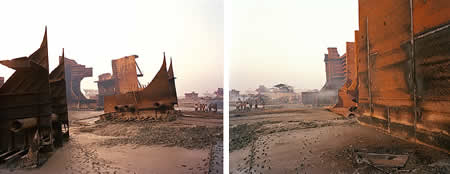
Chittagong, Bangladesh, 2000
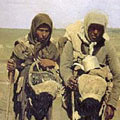
Tot 9 januari 2008 is in het Gemeentemuseum Helmond een tentoonstelling van zijn foto’s te zien. Tegelijkertijd draait in verschillende filmhuizen in ons land de documentaire Manufactured Landscapes
Bron: Manufactured Landscapes (documentaire)


 The design-focused Cooper style had always featured a strong outline or silhouette. Now through the work of Austin Briggs, the ever-inventive Al Parker and the artists associated with the Fredman-Chaite studio in New York City (Bob McGuiness, Bob Peak, Mitch Hooks, Bernie Fuchs, Frank McCarthy and Joe Bowler), mainstream realistic illustration in the 60s devolved to a distillation of line, color, and white space. The rendering was meant to look like a jazzy, improvised sketch or high contrast photograph with broad side pencil slashes, loose, gesture-like contours and flat translucent or granular color. In many ways it was thought to be a repudiation of what the Cooper era had brought to picture making, but it wasn’t entirely new, as many of the conventions remained in place and many longtime illustrators successfully made the transition. Commercial artists still relied heavily on photographs although now they took pains to not look like they did. The scene could have no direct narrative content, making its point by suggestion or association. The women in these images for the most part retained the same All-American features and improvised, candid, ecstatic expressions the Cool School had popularized, but now the reference was abstracted to the essence of volume and the point of view, often from the rear, was pulled back to show the whole figure.