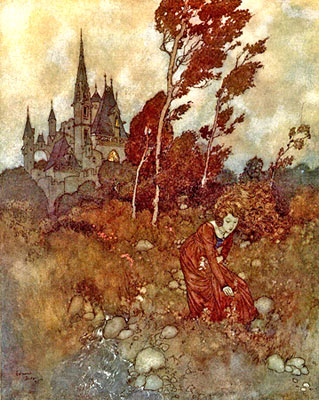
De periode 1870-1930 wordt wel eens The Golden Age of Illustration genoemd. Door het populaire Edwardian Gift Book was het geïllustreerde sprookjesboek in Engeland tot een uitzonderlijk hoog niveau gekomen. De meeste tekenaars die zo’n honderd jaar geleden actief waren, stonden onder invloed van het symbolisme en Jugendstil met zijn geaccentueerde lijnenspel. In deze serie vijf van deze illustratoren uit vijf verschillende landen die in hun unieke beeldtaal bekende sprookjes en sagen visualiseerden: Kay Nielsen, Edmund Dulac, Arthur Rackham, Ivan Bilibin en Harry Clarke.
Born in Toulouse, France,Edmund Dulac began his career by studying law at the University of Toulouse, but also followed classes in the Ecole des Beaux Arts, switching full time to art after he became bored with law, and also having won prizes at the Ecole des Beaux Arts. He spent a very brief period at the Académie Julian in Paris in 1904 before moving to London. In London, the 22-year old Frenchman was picked up by J.M. Dent and given a commission to illustrate the collected works of the Brontësisters. He then began an association with the Leicester Gallery and Hodder & Stoughton; the gallery would commission paintings from Dulac and then sell the rights to Hodder & Stoughton, who would publish the books (one book a year over many years) while the gallery would sell the paintings.
Stories from The Arabian Nights (1907) (50 afbeeldingen in kleur)
The Tempest van Shakespeare (1908) (40 afbeeldingen in kleur)
The Rubaiyat of Omar Khayyam (1909) (20 afbeeldingen in kleur)
The Sleeping Beauty and Other Fairy Tales (1910)
Stories from Hans Christian Andersen (1911)
The Bells and Other Poems van Edgar Allan Poe (1912)
Princess Badoura (1913)
Picture Book for the French Red Cross (1915) (20 afbeeldingen in kleur)
The Dreamer of Dreams (1915) (6 afbeeldingen in kleur)
Edmund Dulac’s Fairy Book (1916)
The Tanglewood Tales (1918) (14 afbeeldingen in kleur)
The Kingdom of the Pearl (1920)
De periode 1870-1930 wordt wel eens The Golden Age of Illustration genoemd. Door het populaire Edwardian Gift Book was het geïllustreerde sprookjesboek in Engeland tot een uitzonderlijk hoog niveau gekomen. De meeste tekenaars die zo’n honderd jaar geleden actief waren, stonden onder invloed van het symbolisme en Jugendstil met zijn geaccentueerde lijnenspel. In deze serie vijf van deze illustratoren uit vijf verschillende landen die in hun unieke beeldtaal bekende sprookjes en sagen visualiseerden: Kay Nielsen, Edmund Dulac, Arthur Rackham, Ivan Bilibin en Harry Clarke.
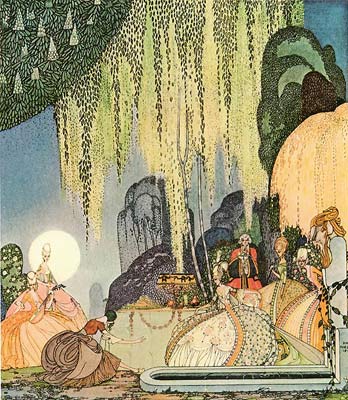
Kay Nielsen was a Danish illustrator who was popular in the early 20th century, the “golden age of illustration” which lasted from when Daniel Vierge and other pioneers developed printing technology to the point that drawings and paintings could be reproduced with reasonable facility, He joined the ranks of Arthur Rackham and Edmund Dulac in enjoying the success of the gift books of the early 20th century. This fad lasted until roughly the end of World War I when economic changes made it more difficult to make a profit from elaborately illustrated books.
illustratie van Kay Nielsen
Kay Nielsen studied art in Paris from 1904 to 1911, and then lived in England from about 1911 to 1916. He received his first English commission from Hodder & Stoughton to illustrate a collection of fairytales, providing 24 colour plates and more than 15 monotone illustrations – In Powder and Crinoline, Fairy Tales Retold by Sir Arthur Quiller-Couch, 1913. In the same year, Nielsen was also commissioned by The Illustrated London News to produce a set of four illustrations to accompany the tales of Charles Perrault – with the images for ‘Le Belle au Bois Dormant’ (‘Sleeping Beauty’), ‘Le Chat Botté’ (‘Puss in Boots’), ‘Cendrillon’ (‘Cinderella’) and ‘La Barbe Bleue’ (‘Bluebeard’) being published in the 1913 Christmas Edition. A year later, he also provided 25 colour plates and more than 21 monotone images for the children’s collection East of The Sun West of The Moon, old tales from the North, 1914. The colour images for both In Powder and Crinoline and East of the Sun and West of the Moon were reproduced by a 4-colour process – in contrast to many of the illustrations prepared by his contemporaries that characteristically utilised a traditional 3-colour process. In 1914, too, Nielsen produced at least three illustrations depicting scenes from the life of Joan of Arc (when published later in the 1920s, those images were associated with relevant text from The Monk of Fife).
Walt Disney verzamelde voor zijn tekenfilms de grootste talenten die hij kon vinden. Vaak waren dat illustratoren van sprookjesboeken. Voor de achtergronden in Sneeuwwitje (1937) had hij gekozen voor de stijl van de Engelse illustrator Arthur Rackham. Een paar jaar later, tijdens de productie van Fantasia, werd de bekende Deense illustrator Kay Nielsen aangetrokken als art director. Zijn stijl werd gebruikt voor de twee laatste composities in Fantasia: Nacht op de Kale Berg van Modest Moessorgsky en Ave Maria van Franz Schubert.
Voor Night on Bald Mountain uit Fantasia (1940) liet meesteranimator Vadimir Tytla zich inspireren door de stijl van Kay Nielsen die in 1939 art director was bij The Walt Disney Company
Night on Bald Mountain/Ave Maria is the final segment of Fantasia, following the music of the same name by Modest Moussorgsky and Franz Schubert. Deems Taylor introduces it as the conflict between the profane (represented by Night on Bald Mountain) and the sacred (represented by Ave Maria). At Walpurgis Night (the Witches’ Sabbath), Chernabog, god of evil, emerges from the peak of Bald Mountain (in reality Mount Triglaf, near Kiev in southern Russia) to summon all of his minions, including ghosts, demons, hags and harpies, who dance furiously as he throws them into the mountain’s fiery pit. Chernabog is driven away by the light of the dawn, and a procession of figures walks up a hill to witness a sunrise. It is perhaps the most famous sequences in Fantasia, if not, second to The Sorcerer’s Apprentice. The sequence showcases the animation of Vadimir Tytla and the style of Kay Nielsen, as well as the longest shot ever produced in the multi-plane camera (in the procession).
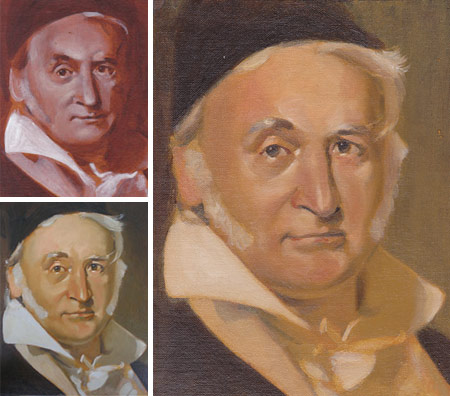
kopie van het portret van Carl Friedrich Gauss uit 1840
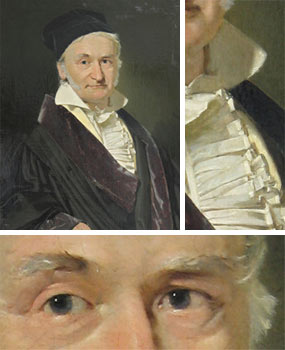
door Christian Albrecht Jensen (1792-1870)
De meesterhand van Christian Albrecht Jensen volg ik graag. Zijn portret van de Duitse wetenschapper Carl Friedrich Gauss uit 1840 is met een benijdenswaardige handigheid en levendigheid geschilderd. Jensen beheerst zijn spontane ‘reflexen’ een kenmerk van virtuositeit en sprezzatura.
portret van Carl Friedrich Gauss uit 1840 Christian Albrecht Jensen
De kopie is in drie stadia geschilderd: eerst een toonschildering in acrylverf op een roodbruine imprematura. Vervolgens een sluierlaag van olieverf en medium (rauwe Sienna en een beetje zinkwit) om optisch grijs (dus ruimte) te scheppen. Tenslotte de a la prima schildering in olieverf. De kopie is uitgevoerd in de volgende kleuren: zinkwit, titaanwit, gebrande sienna, rauwe sienna, oker, karmijn en rauwe omber.
kopie naar Christian Albrecht Jensen
Christian Albrecht Jensen was a Danish portrait painter who was active during the Golden Age of Danish Painting in the first half of the 19th century. Painting more than 400 portraits over the course of his career, he depicted most of the leading figures of the Danish Golden Age, including the writer Hans Christian Andersen, the painter Christoffer Wilhelm Eckersberg, the sculptor Bertel Thorvaldsen, the physicist Hans Christian œrsted and the theologian Nikolaj Frederik Severin Grundtvig. Although Jensen experienced considerable commercial success, he received little official appreciation from the artistic establishment of his day. In particular, the art historian and critic Niels Lauritz Hàyen criticized his style, finding his paintings ‘unfinished’.
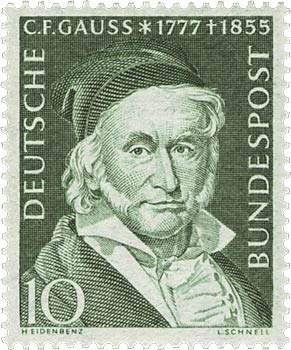
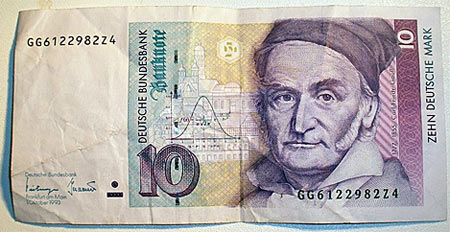
Gauss‘ portret is vaak gereproduceerd en verscheen op een postzegel uit 1955 van de Deutsche Bundespost. Maar de wereld raakte pas echt bekend met Jensens portret van Gauss toen het op het biljet van 10 Mark verscheen. Het portret moest wel in spiegelbeeld afgebeeld worden omdat de beeltenis op een bankbiljet naar links moet kijken.
Volgens Hannah Arendt trok er door het denken van haar leermeester Martin Heidegger een storm. “Hij komt uit het oeroude en wat hij achterlaat, is iets volmaakts, dat zoals al het volmaakte terugvalt aan het oeroude.” Wij gingen bij de beroemde blokhut in Todtnauberg kijken of Arendt gelijk had.
In het Rijk van de Geest is alles tegenwoordige tijd en daar alleen ben je onsterfelijk. Zolang je maar niet vergeten wordt, leef je voort. Maar als je bent weggezonken in het collectieve geheugen, kun je met een lemma op wikipedia.org weer boven water komen.
Deze serie begon op 9 april 2010, precies 145 jaar na het einde van de Civil War, misschien wel het grootste trauma uit de Amerikaanse geschiedenis. Het laatste artikel verscheen op 3 juli 2013. Dat was precies 150 jaar na de Slag bij Gettysburg, het keerpunt in de oorlog.
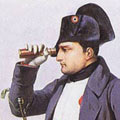
Weinig historische figuren zijn zo vaak geschilderd als Napoleon Bonaparte. Niet alleen tijdens zijn bewind maar ook daarna bleven schilders historische gebeurtenissen vastleggen met Napoleon in het centrum van de aandacht. Geschiedvervalsing. Omdat het moest.
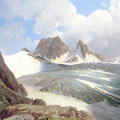
Met de Goethezeit wordt in Duitsland de periode 1770-1830 aangeduid. Niet alleen de filosofie, literatuur, beeldhouwkunst, architectuur en muziek kwamen in het Duitse taalgebied tot bloei maar ook de romantische landschapsschilderkunst.
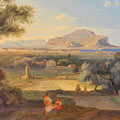
Tot in de 19e eeuw was de reis naar Italië voor veel kunstenaars een verplicht nummer. Tijdens de Grand Tour werden Venetië, Florence en Rome bezocht waar de meesters bestudeerd werden. Maar het Italiaanse landschap bleek voor veel kunstenaars aantrekkelijker.
Nu de overheid zich als mecenas heeft teruggetrokken worden veel kunstenaars weer afhankelijk van rijke opdrachtgevers en verzamelaars. Net als vroeger dus, toen veel kunstenaars vaak tegen wil en dank de lakeien van de heersende klasse waren.
De Philokalia is een verzameling geestelijke geschriften die tussen de vierde en veertiende eeuw (in het Grieks) geschreven zijn en in de achttiende eeuw door de heilige Nikodimos van de berg Athos gebundeld zijn. Zijn tijdgenoot Paisius Velichkovsky maakte een vertaling in het Kerkslavisch.
In de Middeleeuwen was er eigenlijk maar één boek. Na de revolutie van de boekdrukkunst kreeg de Bijbel concurrentie van eigentijdse maar vooral ook van klassieke geschriften. De compilatie van mythen die Ovidius aan het begin van onze jaartelling in klassiek Latijn had samengesteld, werd een inspiratiebron voor ontelbare schilders.
Dante stelt zich het Inferno voor als een trechter die breed begint onder het aardoppervlak en dan toeloopt naar het ijskoude middelpunt van de aarde. Daar zetelt Lucifer. Er zijn negen kringen. Dante en Vergilius ontmoetten er steeds grotere zonden en grotere zondaars.
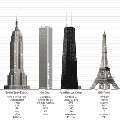
Chicago en New York werden eind 19e eeuw proeftuinen waar de skyscraper dankzij een stalen constructie steeds hoger kon worden. Er lagen ook twee Amerikaanse gedachten aan ten grondslag:
"Form follows function" en "The sky is the limit."
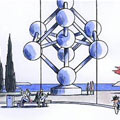
In de zomer van 2009 was in het Atomium in Brussel de tentoonstelling A la recherche du “Style Atome” te zien. Het is een swingende stijl uit de jaren vijftig die nog steeds beoefend wordt. Noem het geen retro. De atoomstijl is iets speciaals.
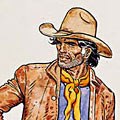
In 1963 begon de Franse striptekenaar Jean Giraud (1938-2012) samen met scenarist Jean-Michel Charlier (1924-1989) aan zijn levenswerk: Blueberry. Ze lieten zich daarbij inspireren door de spaghettiwestern. Het 50-jarige jubileum van zijn antiheld maakte Giraud net niet meer mee. Hij overleed in 2012.
Belgian woodcuts & Russian Luboks. Underground comics & Midcentury Modern. Genesis, Pink Floyd & Film Noir ...
These are a few of my favorite things ...
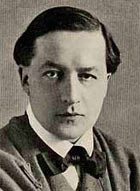 Born in Toulouse, France, Edmund Dulac began his career by studying law at the University of Toulouse, but also followed classes in the Ecole des Beaux Arts, switching full time to art after he became bored with law, and also having won prizes at the Ecole des Beaux Arts. He spent a very brief period at the Académie Julian in Paris in 1904 before moving to London. In London, the 22-year old Frenchman was picked up by J.M. Dent and given a commission to illustrate the collected works of the Brontësisters. He then began an association with the Leicester Gallery and Hodder & Stoughton; the gallery would commission paintings from Dulac and then sell the rights to Hodder & Stoughton, who would publish the books (one book a year over many years) while the gallery would sell the paintings.