Newsweek gaat deze week terug naar 1968
en ik herontdekte de Cosmic Sixties Style van Peter Max
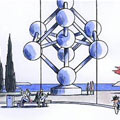
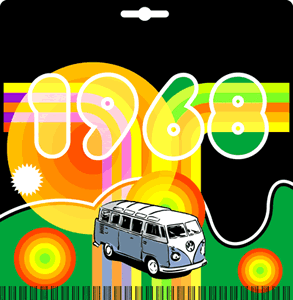
Over zeven weken zitten we alweer in 2008 en Newsweek wil er op tijd bij zijn om 1968 te herdenken, het jaar dat alles veranderde, volgens het Amerikaanse opinieblad. De legendarische sixties artist Peter Max ontwierp de cover die mij onmiddellijk opviel. In juni had ik wat ‘digitale schetsen’ gemaakt in de stijl van 1968 en daarbij ook letterlijk het jaartal erbij genomen. Ik noem deze stijl gewoonlijk de Yellow Submarine-look met zijn zuurstokkleuren, ronde vormen en contouren in concentrische kringen. Voor psychonaut Peter Max was dit de Cosmic Sixties style. Het werd hét gezicht van 1968.
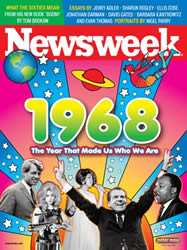
When you think of 1968, you think of riots, assassinations, the Vietnam war, the youth revolt, the backlash and the songs that reflected it all. It was the year of “Hey, Jude,” “Revolution” and “Street Fighting Man” the last two making it clear that wealthy rock stars didn’t want to push this youth revolt thing too far. It was also the year James Brown, in “Say It Loud (I’m Black and I’m Proud),” told his fellow Americans that blacks would “rather die on our feet than keep livin’ on our knees.” At least he had some grit when he wasn’t cozying up to Hubert Humphrey. Strange days.
Bron:
newsweek.com
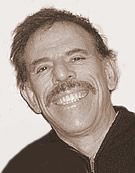 When Peter Max left art school, Max had become fascinated with new trends in commercial illustration and graphic arts, from America as well as Europe and Japan. He decided to try his hand at it and within a short time, he won awards for album covers and book jackets, which combined his own brand of realism with graphic art techniques. Max also admired the work of contemporary photographers such as Bert Stern, Richard Avedon, and Irving Penn, which led to his photo collage period, in which he had captured the psychedelic era of the mid’60s.
As the ’60s progressed, the photo collages gave way, to his famous “Cosmic Sixties” style, with its distinctive line work and bold color combinations. This new style developed as a spontaneous creative urge, following Max’s meeting with Swami Satchidananda, an Indian Yoga master who taught him meditation and the spiritual teachings of the East. Max’s Cosmic ’60s art, with its transcendental imagery captured the imagination of the entire generation and catapulted the young artist to fame and fortune. Max was suddenly on numerous magazine covers, including Life Magazine, and appeared on national TV. Max’s visual impact on the ’60s has often been compared to the influence the Beatles had with their music.
Bron: petermax.com
petermax.com


 Vorige week woensdag zond Arte