Het portret in de Amerikaanse kunst van de twintigste eeuw
in de Smithsonian National Portrait Gallery
in de Smithsonian National Portrait Gallery
Zoals de meeste Amerikaanse musea is ook het Smithsonian American Art Museum (SAAM) sterk in thematische presentaties op het web. Inmiddels is er een uitgebreid archief ontstaan waarin je eindeloos kunt rondstruinen langs vele presentaties op het gebied van kunst en design, geschiedenis en cultuur en wetenschap en technologie. Uit de vele onderwerpen die onder kunst en cultuur gepresenteerd worden, koos ik de presentatie Eye Contact over het portret in de Amerikaanse kunst van de twintigste eeuw.
The art of portraiture, after thriving for generations at the forefront of the visual arts, rode a roller coaster of reputation in the twentieth century. First it was re-empowered as experimental, then discredited in an age of abstraction, and gradually rediscovered. But although portrait traditions were buffeted by new ways of thinking about art and the individual, artists never completely abandoned the figure; they continued to experiment. These drawings from the National Portrait Gallery’s collections, dating from the 1880s to the 1980s, are adventurous, assertive, witty, or monumental. They all reflect modern themes and aesthetic concerns, confirming the vitality of twentieth-century portraiture.
Bron: npg.si.edu
Bron: npg.si.edu

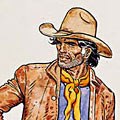
John Steinbeck door James Fitzgerald
Fitzgerald shared Steinbeck’s self-reliant approach to artistic creativity, although their friendship was stormy. The two were part of a circle of artists, writers, and intellectuals who gathered around the charismatic figure of marine biologist Edward (“Doc”) Ricketts in Monterey, California. Fitzgerald’s portrait is an attempt to capture the essence of Steinbeck’s personality and creative spirit, rather than a response to a single sitting. The dominant role of the dark pullover and deep shadow over the left side of Steinbeck’s face evoke his famously reclusive persona.
Bron: npg.si.edu
Bron: npg.si.edu

Andy Warhol door Jamy Wyeth 1976
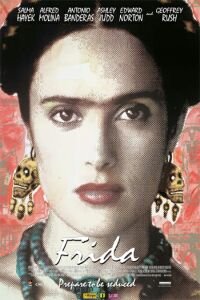 Frida Kahlo wordt geboren in 1907 en wordt reeds in 1913 op zesjarige leeftijd getroffen door kinderverlamming aan haar linkerbeen. Dit is de bron van een aantal complexen die ze haar hele leven zal meedragen. Het enige naakt van haar, is geschilderd door haar echtgenoot Diego Rivera in 1930 zittend op een stoel, haar magere been onder het andere, zodat haar handicap niet opvalt.
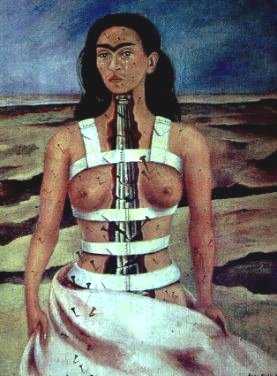 Op 21 augustus 1929 huwt ze met Diego Rivera. De ex-vrouw van Rivera, Lupe Marin, komt een scène maken op het trouwfeest. Christina, zus van Frida, bekent in de zomer van 1934 dat ze een verhouding heeft met Diego Rivera. Frida verlaat daarop Diego. Een jarenlange oorlog tussen beiden speelt zich af tot ze uiteindelijk realiseren dat ze niet zonder elkaar kunnen. Op 8 december 1940 hertrouwen ze. Hun eigenaardig huwelijkscontract stipuleert dat Frida geen seksuele omgang meer hoeft te hebben met haar man.