Het tweede deel van de Philokalia wordt voor meer dan de helft gevuld met geschriften van Maximos de Belijder. De paragrafen zijn in centuria gebundeld. Maximos schrijft veel over het doel van het leven: het worden als God. In de Orthodoxe Kerk wordt het geestelijke doel van de mens met het woord theosis aangeduid. Opvallend in onze tijd, waarin New Age zoveel populariteit geniet, is dat de Orthodoxie altijd spreekt over een relatie met de Ander, waarin God altijd maar groter wordt en wijzelf steeds kleiner. New Age (als mix van oosterse mystiek en gnosis) staat met het (hogere) Zelf dan ook lijnrecht tegenover de theosis waar de vaders (en moeders) van de Kerk over spreken.
 “A sure warrant for looking forward with hope to deification of human nature is provided by the incarnation of God, which makes man god to the same degree as God Himself became man. For it is clear that He who became man without sin (cf. Heb. 4:15) will divinize human nature without changing it into the divine nature, and will raise it up for His own sake to the same degree as He lowered Himself for man’s sake. This is what St. Paul teaches mystically when he says, ‘that in the ages to come He might display the overflowing richness of His grace’ (Eph. 2:7). (p. 178)
“Deification, briefly, is the encompassing and fulfilment of all times and ages, and of all that exists in either. This encompassing and fulfilment is the union, in the person granted salvation, of his real authentic origin with his real authentic consummation. This union presupposes a transcending of all that by nature is essentially limited by an origin and a consummation. Such transcendence is effected by the almighty and more than powerful energy of God, acting in a direct and infinite manner in the person found worthy of this transcendence. The action of this divine energy bestows a more than ineffable pleasure and joy on him in whom the unutterable and unfathomable union with the divine is accomplished. This, in the nature of things, cannot be perceived, conceived or expressed.” (p. 240)
Bron: divinewill.org
Maximos de Belijder in de Philokalia (deel II)
Four Hundred Texts on Love, with a foreword to Elpidios the Presbyter
Two Hundred Texts on Theology and the Incarnate Dispensation of the Son of God (written for Thalassios)
Various Texts on Theology, the Divine Economy, and Virtue and Vice
On the Lord’s Prayer

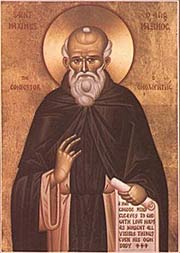 Maximos the Confessor wrote many theological works in defense of Orthodoxy. Especially valuable are his instructions on the spiritual and contemplative life, some of which are included in The Philokalia, a collection of patristic instructions on prayer and the ascetic life. In these ascetic instructions, the spiritual profundity and perceptiveness of St. Maximos’ thought is revealed. Also, an explanation of the Liturgy that has a great theological significance is included.