The Illustrated London News en de Krimoorlog
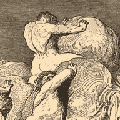
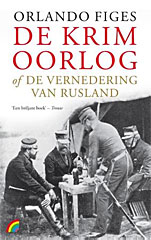
Tien jaar voordat Harper’s Weekly verslag deed van de Amerikaanse Civil War, deed The Illustrated London News al hetzelfde voor Engeland met de Krimoorlog. De Victorianen konden zich een beeld vormen van het front aan de hand van staalgravures. Op internet staat een archief van dit magazine dat tussen 1842 en 1901 werd uitgegeven en dat dus bijna samenvalt met de regeerperiode van Queen Victoria. In De Krimoorlog of de vernedering van Rusland schrijft Orlando Figes dat de verkoopcijfers van The Illustrated London News door de Krimoorlog als een komeet omhoog schoten.
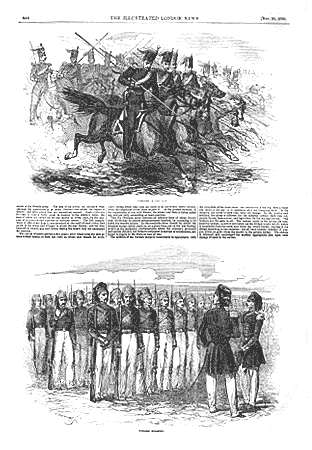
The Illustrated London News 1853
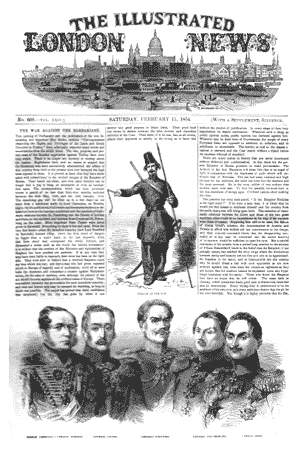
The Illustrated London News 1854
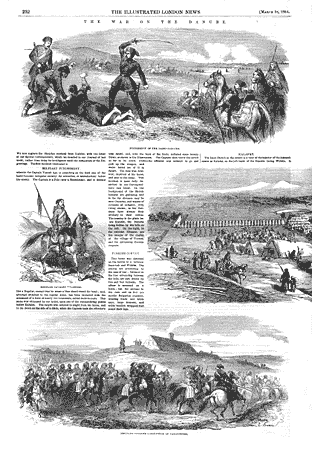
The Illustrated London News 1854
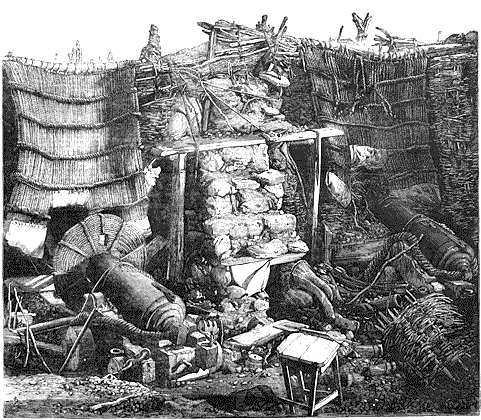
staalgravure uit The Illustrated London News van 15 maart 1856 bij het einde van de Krimoorlog.
 Een van de bekendste episodes uit de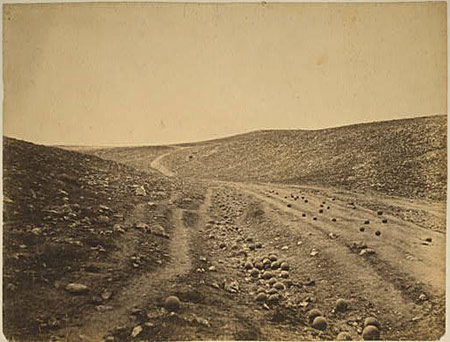
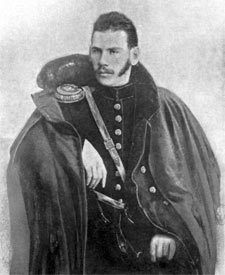
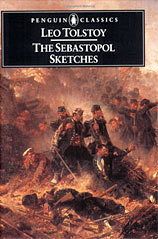 Tijdens de
  Toward the north the activity of the day begins gradually to replace the nocturnal quiet; here the relief guard has passed clanking their arms, there the doctor is already hastening to the hospital, further on the soldier has crept out of his earth hut and is washing his sunburnt face in ice-encrusted water, and, turning towards the crimsoning east, crosses himself quickly as he prays to God; here a tall and heavy camel-wagon has dragged creaking to the cemetery, to bury the bloody dead, with whom it is laden nearly to the top. You go to the wharf—a peculiar odor of coal, manure, dampness, and of beef strikes you; thousands of objects of all sorts—wood, meat, gabions, flour, iron, and so forth—lie in heaps about the wharf; soldiers of various regiments, with knapsacks and muskets, without knapsacks and without muskets, throng thither, smoke, quarrel, drag weights aboard the steamer which lies smoking beside the quay; unattached two-oared boats, filled with all sorts of people,—soldiers, sailors, merchants, women,—land at and leave the wharf.