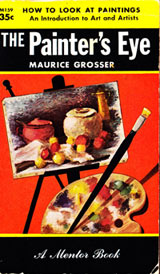
gelezen The Painter’s Eye (1951) van Maurice Grossman
Chapter Six: The Second Revolution
Chapter Six: The Second Revolution
 The Academic tradition, as I have already pointed out, was principally concerned with the planned picture. All the academic devices of underpainting, color theory, composition, anatomy, drawing from nude models and painting from these drawings, historical research in costume, literary research in the classics, and so on, which are still taught at the Academie des Beaux Arts in Paris, had as their sole end the production of a planned picture with a subject. Even today in Paris, a student competing for the Prix de Rome in painting, is shut up ‘en loge’, in a studio with a bed, food, paints,canvas, access to books and models, and a subject (Ceasar on the Rubicon, Achilles in His Trent, The death of Cleopatra) and is expected to paint without help and in a given time a picture by which his merits as a painter can be judged. Since the acadmic devices were designed precisely for turning out these elaborately planned pictures with a subject, the planned picture could lend itself all to easily to anecdote and official poetry. And this, of course, it did. It is perhaps not the fault of the academies that official poetry of the nineteenth century went bad. But the academies did very little to prevent it. Even when such magnificent painters as David and Ingres were at the head of the Beaux Arts, the official poetry the Academy and the salon endorsed was none too good (like the official poetry of Napoleon’s coronation both of these painters illustrated).
After Ingres official poetry was atrocious. Noble romans, cardinals drinking wine, Fausts and Marguerites, Uncle Tobies and Widow Wadmans, Arab slave marts, coy nymphs and satyrs out on a spree, scenes of domestic life, of children, of dogs, of soldiers, that filled the official salons are not too good subjects for pictures, nor would it have been possible to have made good pictures from them. They have nothing to do with the painter’s private view of the world and his own mind, out of which alone good pictures canbe made. They are not even interesting as stories. Their sentimental Romanticism is as false and official as the sentimental Realism of our own movies. These, nevertheless, were the subjects of the pictures accepted by the salon and awarded prizes. For just as our own moviemakers believe that the middle-class life, when glamourized by photography, becomes in some mysterious way interesting, these painters were convinced that an anecdote, no matter how silly, could be dignified by painting into art.
It is on this account that ‘academic painter’ has come to mean ‘bad painter’, and it is here that the Impressionist revolt begins. It is the Impressionist revolution which is the source of all painting of the present day.
Maurice Grosser
The Painter’s Eye, 1951
We today have no ideas how bad these pictures were. We have not seen them. The museum which once bought or accepted them as gifts are ashamed to hang them, or even to admit they still preserve them in their cellars. When they come up at public auction they are knocked down for the dubious value of their gold and plaster frames. Few students of nineteenth century painting know them even as photographs. But what we all know is that after Ingres, no painter we admire today belonged to an official academy. The living tradition of our painting is the tradition of revolt. For us a painter who receives official sanction is under grave suspicion, because, after Corot and until Picasso, not a single paainter whose work has had any influence on our taste or painting received official recognition during his lifetime from these academic circles, or was anything but a scandal to them. It is on this account that ‘academic painter’ has come to mean ‘bad painter’, and it is here that the Impressionist revolt begins. It is the Impressionist revolution which is the source of all painting of the present day.
We are accustomed to think Impressionism as the theory of broken color, as a revolt against the brown sauces of the academic painters. But the Impressionist revolt was more profound than this. It was a revolt against the anecdote, and even against the planned picture itself.
Maurice Grosser
The Painter’s Eye, 1951
We are accustomed to think Impressionism as the theory of broken color, as a revolt against the brown sauces of the academic painters. But the Impressionist revolt was more profound than this. It was a revolt against the anecdote, and even against the planned picture itself. The Impressionists threw overboard the whole body of academic tradition. The great scandal of their painting was not that pictures were bright but that they were unpremediated.
Bron: The Painter’s Eye (1951) by Maurice Grosser
Bron: The Painter’s Eye (1951) by Maurice Grosser
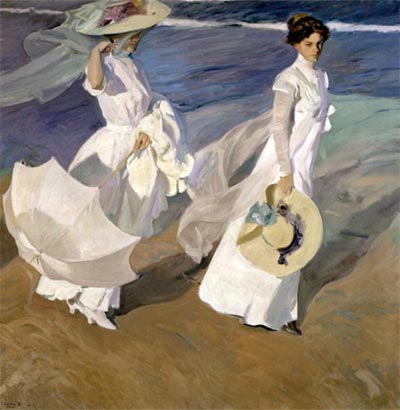
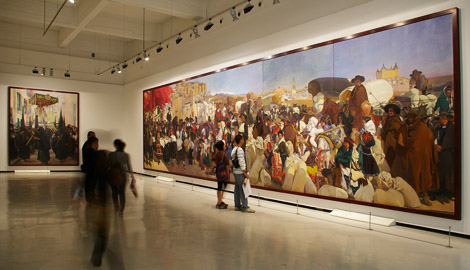
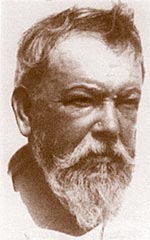 Rond 1900 werd Joaquin Sorolla y Bastida de grootste Spaanse schilder sinds Velasquez (en volgens sommigen sinds Goya) genoemd. Maar in de twintigste eeuw zou zijn naam volledig verdrongen worden door die van Picasso en Dali. Vóór afgelopen woensdag had ik zelfs nog nooit van hem gehoord! Sorolla was in de eerste plaats geen portretschilder, maar mag toch niet ontbreken in het rijtje met virtuoze laat-negentiende eeuwse portretschilders. Anders dan John Singer Sargent, Anders Zorn of Giovanni Boldini schilderde hij niet zozeer portretten van de rijken der aarde, maar was hij vooral geïnteresseerd in taferelen uit het dagelijks leven, bij voorkeur het leven aan het strand van Valencia, de stad waar hij voor altijd mee verbonden blijft. Je kunt hem enigszins vergelijken met zijn tijdgenoot Israëls, Isaac Israëls welteverstaan. Want ook al deelde vader Jozef Israels zijn belangstelling voor het vissersleven, zijn bruine palet deelde hij niet met zoon Isaac en Sorolla. De jongere generatie voelde zich juist aangetrokken tot het stralende impressionistische palet. Maar in zijn beginperiode werd Sorolla nog wéll beïnvloed door de oude meesters die hij in het Prado bestudeerde en werkte hij in een bruine grondtoon. De onderstaande tronies zijn daar een voorbeeld van. Ze roepen onmiddellijk het realisme van Velazques en Murillo in de herinnering.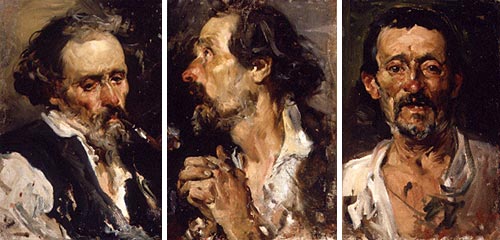
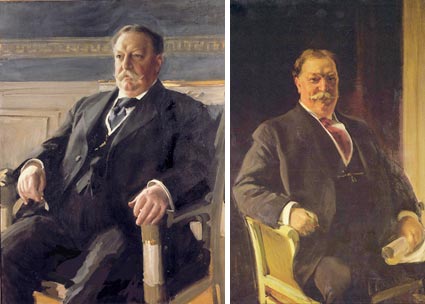
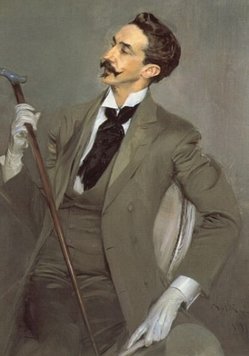
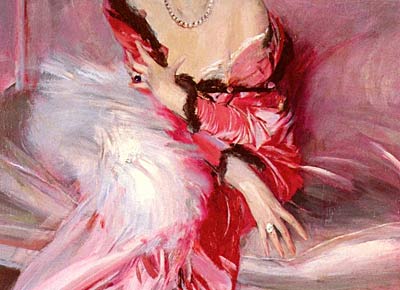
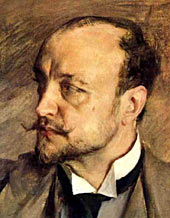 Giovanni Boldini‘s vader was een schilder van religieuze onderwerpen en liet zijn zoon studeren aan de kunstacademie in Florence. In 1872 vertrok Boldini naar Parijs om daar zijn eigen stijl te ontwikkelen. Hij raakte bevriend met James Abbot MacNeill Whistler en met Edgar Degas. In deze periode tonen zijn portretten verwantschap met de portretten van John Singer Sargent maar ook komt hij in Frankrijk onder invloed van het impressionisme. Toen hij het bekende portret van Giuseppi Verdi (1886) schilderde, had Boldini zijn naam als portretschilder al gevestigd. Maar zijn glorietijd begon pas echt toen hij zich in de jaren negentig in Londen gevestigd had. De Master of Swish werd in ‘the Gay Nineties‘ een beroemdheid. Maar later was Giovanni Boldini net als John Singer Sargent en Anders Leonard Zorn een van de vele laat-negentiende eeuwse schilders die door de komst van het modernisme aan het eind van hun leven uit de gratie raakten.