Vigée Le Brun – Woman Artist in Revolutionary France
in het Metropolitan Museum of Art in New York, 15 februari – 15 mei 2016
in het Metropolitan Museum of Art in New York, 15 februari – 15 mei 2016
De tentoonstelling over Elisabeth Vigée Le Brun ( 1755-1842) die afgelopen najaar in het Grand Palais in Parijs te zien was, zal vanaf 15 februari drie maanden lang te zien zijn in het Metropolitan Museum of Art in New York. Daarna reist deze tentoonstelling door naar Ottawa. In oktober schreef ik iets over de documentaire Le fabuleux destin d’Elisabeth Vigée Le Brun die naar aanleiding van deze tentoonstelling over haar leven gemaakt is.
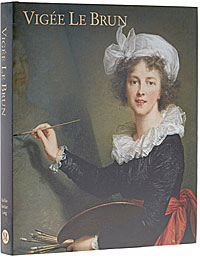 Elisabeth Louise Vigée Le Brun (1755–1842) is one of the finest eighteenth-century French painters and among the most important of all women artists. An autodidact with exceptional skills as a portraitist, she achieved success in France and Europe during one of the most eventful, turbulent periods in European history.
In 1776, she married the leading art dealer in Paris; his profession at first kept her from being accepted into the prestigious Académie Royale de Peinture et de Sculpture. Nevertheless, through the intervention of Marie Antoinette, she was admitted at the age of 28 in 1783, becoming one of only four women members. Obliged to flee France in 1789 because of her association with the queen, she traveled to Italy, where in 1790 she was elected to membership in the Accademia di San Luca, Rome. Independently, she worked in Florence, Naples, Vienna, St. Petersburg and Berlin before returning to France, taking sittings from, among others, members of the royal families of Naples, Russia and Prussia. While in exile, she exhibited at the Paris Salons.(Bron: metmuseum.org)
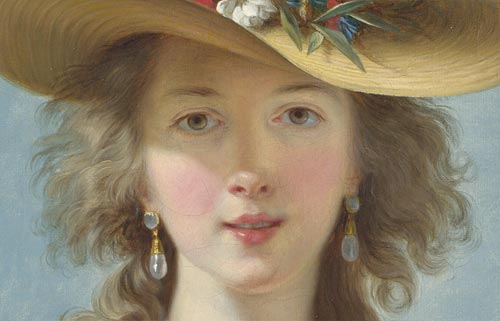
Elisabeth Vigée Le Brun
zelfportret uit 1782 (27 jaar) gekleed als een natuurlijke, ontspannen vrouw volgens de visie van Jean-Jacques Rousseau.
zelfportret uit 1782 (27 jaar) gekleed als een natuurlijke, ontspannen vrouw volgens de visie van Jean-Jacques Rousseau.
She was remarkable not only for her technical gifts but for her understanding of and sympathy with her sitters. This will be the first retrospective and only the second exhibition devoted to Vigée Le Brun in modern times. The eighty works on view will be paintings and a few pastels from European and American public and private collections. (Bron: metmuseum.org)
Le fabuleux destin d’Elisabeth Vigée Le Brun [ boutique.arte.tv ]