Károly Kerényi: Dionysos – Archetypal Image of Indestructable Life
Dinsdag kwam ik op een donker plekje in huis een deel van een studie tegen over Dionysos (1931-1969) van de Hongaarse filoloog en mytholoog Károly Kerényi. Deze heb ik in 1985 gelezen toen ik mij op de kunstacademie bezig hield met het dionysische in de kunst. Tot mijn verrassing zat er een jeugdwerk in van vriend en studiegenoot René. Het Griekse restaurant Dionysos in Nijmegen bestaat overigens nog altijd.
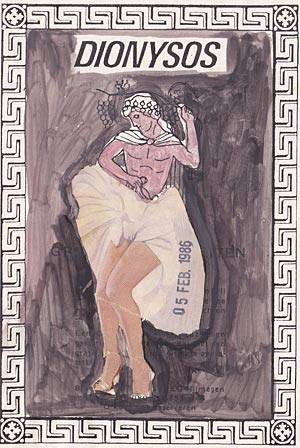
collage van René (1986)
Kerényi looked at the appearances in Greek religion not as curiosities, but as expressions of real human experience.
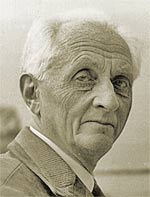 Károly Kerényi saw the theory of religion as a human and humanistic topic which coined his reputation as humanist further. So for him every view of mythology had to be a view of man – and hence theology always had to be at the same time anthropology. In this humanist spirit Kerényi defined himself as philological-historical as well as psychological scholar. In later years Kerényi evolved his psychological interpretation further and replaced the concept of archetypes with one that he labeled „Urbild„. This became particularly clear in some of his most important publications: Prometheus as well as especially in Dionysos, likely Kerényi’s most crucial work, which he had started as idea in 1931 and finished writing in 1969. Kerényi hence looked at the appearances in Greek religion not as curiosities, but as expressions of real human experience.
Bron: en.wikipedia.org
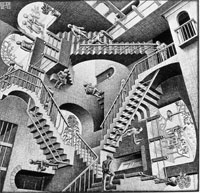 De uitspraak dat “alles relatief is” staat hoog genoteerd in de toplijsten quasi-filosofische kretologie en lui denken. Vaak wordt hiermee dan bedoeld dat er geen absolute waarheid bestaat. Zo laat de relativist zich tegenover de vermeende absolutist juist kennen als de absolutist. Toch kan deze kreet soms zinvol zijn. Timon Meynen legt op de Filosofie Scheurkalender uit dat het gaat om de context en de relatie met de ander.