… is een illustrator uit San Marino


meisje in kasteel – dompteuse
Nicoletta Ceccoli has illustrated many books, mainly in Italy, the USA, and the UK. Her work has been exhibited at the Bologna Children’s Book Fair seven times. She has also shown her work at “L„art a la page” (Paris), Ottogallery (Bologna), Storyopolis (Los Angeles), and Daimaru museum (Osaka). In 2001, Nicoletta was awarded the Andersen prize as best Italian illustrator of the year. She is also a three-time recipient of the “award of exellence” from Communication Arts. In 2006 she received the silver medal from Society of Illustrators (New York).
Bron: nicolettaceccoli.com
Bron: nicolettaceccoli.com
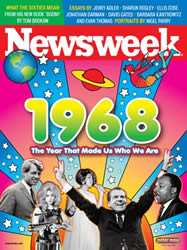 When you think of 1968, you think of riots, assassinations, the Vietnam war, the youth revolt, the backlash and the songs that reflected it all. It was the year of “Hey, Jude,” “Revolution” and “Street Fighting Man” the last two making it clear that wealthy rock stars didn’t want to push this youth revolt thing too far. It was also the year James Brown, in “Say It Loud (I’m Black and I’m Proud),” told his fellow Americans that blacks would “rather die on our feet than keep livin’ on our knees.” At least he had some grit when he wasn’t cozying up to Hubert Humphrey. Strange days.
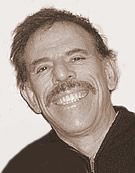 When Peter Max left art school, Max had become fascinated with new trends in commercial illustration and graphic arts, from America as well as Europe and Japan. He decided to try his hand at it and within a short time, he won awards for album covers and book jackets, which combined his own brand of realism with graphic art techniques. Max also admired the work of contemporary photographers such as Bert Stern, Richard Avedon, and Irving Penn, which led to his photo collage period, in which he had captured the psychedelic era of the mid’60s.
 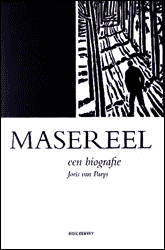 Wij hebben M.C. Escher , in Belgiëhebben ze Frans Masereel. In januari 2005 schreef ik
 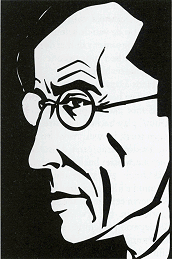 Frans Masereel (1889 – 1972)