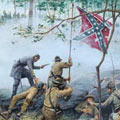
de aanval op Fort Wagner bij Charleston op 18 juni 1863
De Amerikaanse Burgeroorlog was een machtsstrijd tussen blanke mannen. Sinds decennia was er al een rivaliteit tussen de noordelijke staten en de zuidelijke staten, waarbij de afschaffing van de slavernij steeds meer als issue was gaan spelen. Door de industrialisering was het Noorden niet zoals het Zuiden afhankelijk van slavenarbeid. Toen in Engeland in 1834 de slavernij eindelijk werd afgeschaft, lieten de abolitionisten in Verenigde Staten steeds luider van zich horen. Maar het Zuiden liet zich door het Noorden niet de wet voorschrijven. Door de katoen was het Zuiden economisch volledig afhankelijk geworden van de slavernij. “Bemoei je niet met onze zaken!” was kort en duidelijk de boodschap van het Zuiden aan Washington.
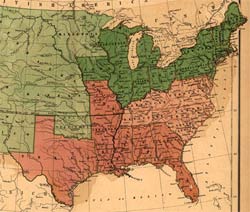 Halverwege de negentiende eeuw liepen de spanningen tussen Noord en Zuid steeds hoger op. Er was steeds een evenwicht gebleven tussen het aantal zuidelijke slavenstaten (rood) en de noordelijke slavenvrije staten (groen). Maar toen er met de uitbreiding ten westen van de Mississippi in de nieuwe territoria nieuwe staten werden gevormd, kwam men voor het probleem te staan of in deze staten wéll of geen slavernij zou moeten worden toegestaan. Deze open zenuw zette de verhouding tussen het Noorden en het Zuiden op scherp. Tussen 1854 en 1858 ontstond er in de nieuw te vormen staat Kansas een bendeoorlog tussen Jayhawkers en Buswhackers. Bleeding Kansas zou het voorspel van de Amerikaanse Burgeroorlog worden. De strijd bleef weliswaar beperkt tot het nieuwe territorium ten westen van de Mississippi en delen van Missouri, maar was zeer wreed voor de burgerbevolking die vaak tussen twee kampen in stond. In de film Ride with the devil die zich afspeelt in Kansas en Missouri, wordt dat realistisch getoond.
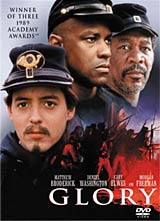 Afgelopen week zag ik dan eindelijk Glory, die door velen beschouwd wordt als de beste film die over de Amerikaanse Burgeroorlog gemaakt is. In tegenstelling tot veel andere Civil War movies werd er in de Verenigde Staten ook een flinke winst gemaakt op deze film. Ongetwijfeld komt dat doordat deze film politiek correct is. Niet toevallig is het ook een film die vooral vanuit het noordelijk perspectief gemaakt is. Een film waarin het meer gaat over de verbroedering van Noord en zwart dan om een broedermoord zoals in Gettysburg. In Glory krijgen de rebellen uit het Zuiden geen gezicht, zodat we de oorlog niet eens vanuit zuidelijk perspectief kunnen bekijken. Het Zuiden is de vijand. Punt. In dit opzicht is Gettysburg een meer genuanceerde film. Maar het is een hachelijke zaak voor filmproducenten om af te wijken van het standpunt van de overwinnaar, het Noorden. Dat heeft de producent van Ride with the devil geweten. In deze film vecht een slaaf vrijwillig met de witte man uit het Zuiden tegen het Noorden. Het Amerikaanse publiek strafte deze politieke incorrectheid genadeloos af. De laatste film bracht iets meer op dan een half miljoen dollar, terwijl aan Glory 63 miljoen dollar werd verdiend. De blanke man uit het Noorden heeft het sinds 1865 voor het zeggen. Maar Glory geeft ook kritiek op het Noorden. Veel ontsnapte slaven uit het Zuiden werden in zekere zin opnieuw slaaf, maar nu in het leger van de blanke man in het Noorden. De zwarte soldaten werden steeds als minderwaardig gezien en kregen bijvoorbeeld minder betaald dan de blanke soldaten.
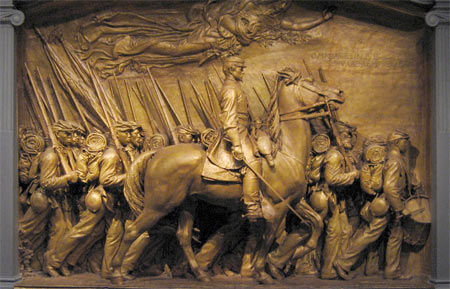
door Augustus Saint-Gaudens, 1897
National Gallery of Art Washington
Glory gaat over de historische personage Robert Gould Shaw, die de leiding krijgt over de 54ste infanterie van Massachusetts. Het is een regiment dat enkel uit zwarten bestaat. Shaw en zijn regiment zijn onvergetelijk geworden door de heldhaftige bestorming van Fort Wagner op 18 juli 1863, krap drie weken na de slag bij Gettysburg. Shaw en honderden van zijn mannen kwamen hierbij om het leven, zonder dat het fort genomen wordt. In de National Gallery of Art in Washington worden zij geëerd met de Robert Gould Shaw Memorial, maar het mooiste monument is waarschijnlijk deze film.
Robert Gould Shaw (1837-1863)
was the colonel in command of the all-black 54th Regiment, which entered the American Civil War in 1863. He was killed in a failed attempt to capture Fort Wagner, near Charleston, South Carolina. ( … )Shaw was approached by his father while in camp in late 1862 to take command of a new All-Black Regiment. At first he declined the offer, but after careful thought accepted the position. Shaw’s letters clearly state that he was dubious about a free black unit succeeding, but the dedication of his men deeply impressed him, and he grew to respect them as fine soldiers. On learning that black soldiers would receive less pay than white ones, he inspired his unit to conduct a boycott until this inequality was rectified. The enlisted men of the 54th Massachusetts Infantry (and the sister 55th) refused pay until Congress granted them full back pay at the white pay rate in August 1864.The 54th Regiment was sent to Charleston, South Carolina, to take part in the operations against the Confederates stationed there. On July 18, 1863, along with two brigades of white troops, the 54th assaulted Confederate Battery Wagner. As the unit hesitated in the face of fierce Confederate fire, Shaw led his men into battle by shouting, “Forward, Fifty-Fourth Forward!” He mounted a parapet and urged his men forward, but was shot through the heart and he died almost instantly. According to the color Sgt of the 54th Mass, he was shot and killed trying to lead the unit forward and fell on the outside of the fort.
Bron: en.wikipedia.org
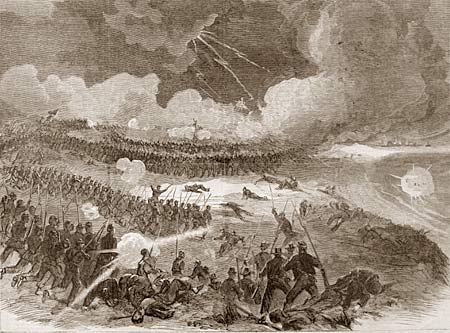
in Harper’s Weekly 8 augustus 1863
Harper’s Weekly was het CNN van de Civil War
Bron: sonofthesouth.net
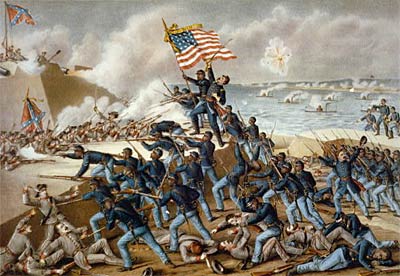
18 juli 1863
Bron: imdb.com
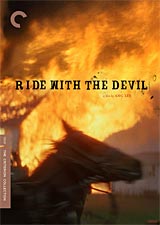 De Verenigde Staten stonden 150 jaar geleden aan de vooravond van de bloedigste oorlog die het land ooit heeft gekend. Het was bovendien een burgeroorlog, een broedermoord. Het grootste trauma uit de Amerikaanse geschiedenis is desondanks nog springlevend in de cinema. Gone with the wind uit 1939 is wellicht nog altijd de bekendste film die zich afspeelt tegen de achtergrond van de bloedigste episode uit de Amerikaanse geschiedenis. Daarna verschenen er nog eens honderden films en televisieseries over de Amerikaanse Burgeroorlog. Wat mij intrigeert is de manier waarop filmscenaristen laveren tussen de publieke opinies in de noordelijke en zuidelijke staten. Want ook al ligt de Civil War alweer ver in het verleden, de sentimenten die 150 jaar geleden oplaaiden in een blinde haat en bloedige strijd zijn nog altijd sluimerend aanwezig en dat maakt de Amerikaanse Burgeroorlog een gewaagd onderwerp voor filmproducenten.
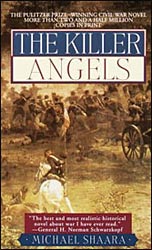 Een van de beste films die ik over de Amerikaanse Burgeroorlog heb gezien, is
 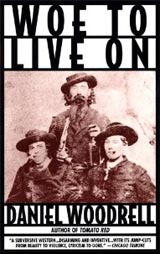 Woe to live on
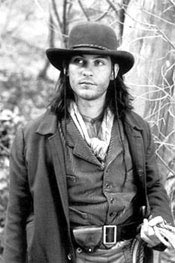 Ride with the devil is gebaseerd op de roman Woe to live on van Daniel Woodrell uit 1987. Anders dan Gettysburg dat zich afspeelt in Pennsylvania vormt in dit verhaal de strijd in het westen het toneel. In de staten Missouri en Kansas werd in tegenstelling tot de georganiseerde oorlog in het oosten een monsterachtige guerilla-oorlog uitgevochten tussen rondzwervende bendes met vrijschutters. De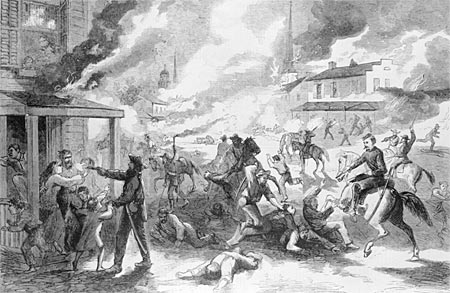
 In deze film noir van Fritz Lang liggen de wensdroom en de nachtmerrie van de man van middelbare leeftijd dichtbij elkaar. Nadat een professor psychologie voor het betreden van een herensociëteit geraakt is door een betoverend vrouwenportret in de etalage, heeft hij met zijn vrienden een gesprek over het klimmen der jaren en het verlangen naar avontuur. Wanneer hij weer alleen is, leest hij uit het Hooglied, nog steeds betoverd door het portret. Als hij dat