Sergei Eisenstein
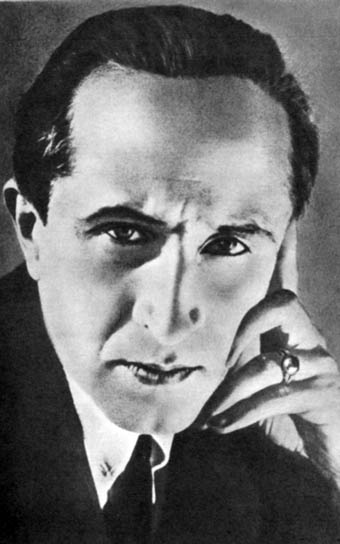
De bekendste Russische cineast is natuurlijk Sergei Eisenstein. Vorig jaar besteedde ik hier aandacht aan zijn meesterwerk Pantserkruiser Potëmkin uit 1925 maar ook aan zijn film Alexander Nevski uit 1938.
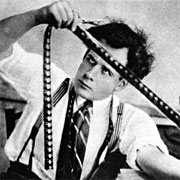 A master of the early Soviet cinema, Eisenstein was responsible for a group of imaginative and exciting silent films employing rapid, rhythmic montage and a feverish visual invention. Once universally acclaimed, Eisenstein’s reputation has suffered in recent years, with many finding his propaganda too strident, but Strike and Battleship Potemkin, at least, remain films of extraordinary energy and power. Eisenstein’s later career was inhibited by ill health and his work suffered official disapproval under Stalinism, but his last film, Ivan The Terrible, remains a decadent masterpiece brimming with grotesque invention.
The Battleship Potemkin originally released: 1925
Eisenstein’s most famous film displays his strident visual invention at its early peak, and ranks as one of the most intense of all silent films. Unquestionably the power lies above all in the editing, which remains extraordinary for its dynamism and power; the Odessa Steps sequence is shattering in its tension and imagery of explosive violence. The propagandistic aspects of the piece are a little wearing, and Eisenstein tends to sacrifice subtlety for force. But the film’s demented visual invention is nevertheless stunning.
Bron: thecontext.com
 Kuleshov edited a short film in which shots of the face of Ivan Mozzhukhin (a Tsarist matinee idol) are alternated with various other shots (a plate of soup, a girl, a child’s coffin). The film was shown to an audience who believed that the expression on Mozzhukhin’s face was different each time he appeared, depending on whether he was `looking at’ the plate of soup, the girl, or the child’s coffin, showing an expression of hunger, desire or grief respectively. Actually the footage of Mozzhukhin was identical, and rather expressionless, every time it appeared. Vsevolod Pudovkin (who later claimed to have been the co-creator of the experiment) described in 1929 how the audience “raved about the acting…. the heavy pensiveness of his mood over the forgotten soup, were touched and moved by the deep sorrow with which he looked on the dead woman, and admired the light, happy smile with which he surveyed the girl at play. But we knew that in all three cases the face was exactly the same.”
 Als Dressed to Kill de beste thriller van de jaren 80 is, dan is Basic Instinct het van de jaren 90. Gisterenavond was hij weer eens op televisie te zien. Ooit kwam ik niet verder dan het afgrijselijke expliciete begin en zette ik vol walging de televisie uit. Toen ik jaren later eens halverwege de film begon te kijken (zonder overigens te weten dat dit Basic Instinct was) merkte ik al snel dat ik te maken had met een knap gemaakte psychologische thriller. De expliciete sex en geweldscenes vind ik nog steeds storend, maar het scenario van
  Veertien jaar nadat Sharon Stone de benen spreidde in ‘Basic Instinct’ van Paul Verhoeven, vertolkt ze opnieuw de rol van schrijfster Catherine Tramell. Deze tweede film speelt zich af in Londen: na het verdachte overlijden van een voetbalster wordt Tramell ondervraagd door de Metropolitan Police. Om een psychologisch profiel op te stellen van de hitsige romancière wordt een beroep gedaan op psychiater Michael Glass (David Morrisey). De succesvolle zielenknijper staat aan de top van zijn carrière, maar de intense uren met de mooie Amerikaanse halen zijn wereld overhoop. Kan zijn rationaliteit het halen van de natuurlijke driften die hij plots ervaart? Met haar 48 lentes ziet Sharon Stone er nog steeds verrukkelijk uit.