Categorie archief: muziek

back to the sixties [ 1 ]

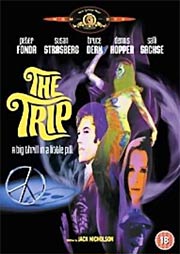
gezien met Michaela op DVD : The Trip (1967)

the tripIn 1967 onderneemt Peter Fonda een LSD trip in de gelijknamige cultfilm. Zijn zusje Barbarella doet een jaar later die hele trip weer vergeten. Maar haar broertje laat het er niet bij zitten en is weer een jaar later samen met Dennis Hopper (die hij nog kende van zijn trip uit 1967) van de partij in Easy Rider En zo hebben de twee Fonda-kids zich met Barbarella en Easy Rider voor altijd met de sixties weten te verbinden. Zozeer zelfs dat dertig jaar na Easy Rider Peter Fonda samen met die andere sixties icon Terrence Stamp in Soderbergh’s The Limey nog eens de bejaarde hippie mag spelen. Overigens werd het script voor The Trip geschreven door ervaringsdeskundige Jack Nicholson die in 1967 nog tamelijk onbekend was. Maar dat veranderde toen hij in Easy Rider achterop de brommer van Peter Fonda mocht meerijden…

Did you ever dream about a place you never really recall being to before? A place that maybe only exists in your imagination? Some place far away, half remembered when you wake up. When you were there, though, you knew the language. You knew your way around. That was the sixties.
[pause]
No. It wasn’t that either. It was just ’66 and early ’67. That’s all there was.
 
Peter Fonda als Terry Valentine in The Limey (1998)
beelden uit the trip met muziek van Pink Floyd (Set the controls for the heart of the sun)

The Trip [ en.wikipedia.org]

the father of record design

nieuw bij uitgeverij Taschen: Alex Steinweiss
The man who made music for his eyes

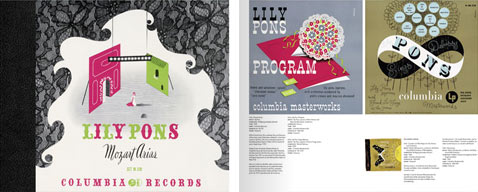
Uitgeverij Taschen geeft heel veel moois uit. Vaak betaalbaar, soms onbetaalbaar. Althans voor mij. Gelukkig kun je de Art Edition over vormgever Alex Steinweiss op internet compleet doorbladeren.

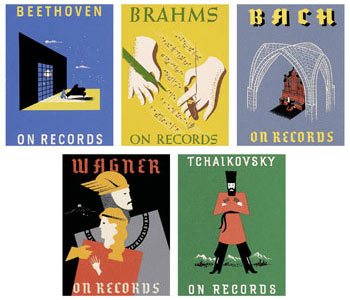
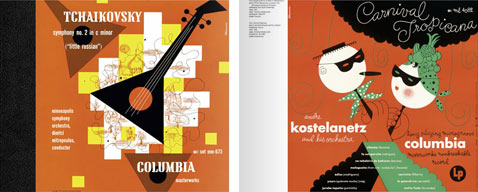
Alex Steinweiss invented the album cover as we know it, and created a new graphic art form. In 1940, as Columbia Records„ young new art director, he pitched an idea: Why not replace the standard plain brown wrapper with an eye-catching illustration? The company took a chance, and within months its record sales increased by over 800 per cent. His covers for Columbia combining bold typography with modern, elegant illustrations took the industry by storm and revolutionized the way records were sold.
 
Bron: taschen.com
Alex Steinweiss
Over three decades, Steinweiss made thousands of original artworks for classical, jazz, and popular record covers for Columbia, Decca, London, and Everest; as well as logos, labels, advertising material, even his own typeface, the Steinweiss Scrawl. He launched the golden age of album cover design and influenced generations of designers to follow. Less well known but included here are his posters for the U.S. Navy; packaging and label design for liquor companies; film title sequences; as well as his fine art. Includes an essay by design historian Steven Heller; Steinweiss„ personal recollections from an epic career; and extensive ephemera from the Steinweiss archive, most of it never before published.
 
Bron: taschen.com
Alex Steinweiss
The father of record design
is Alex Steinweiss, who in 1940, at the age of 23, single-handedly invented the album cover. He made thousands of classical, jazz, and pop covers for Columbia, London, Decca, and Everest and his modern designs graced the packaging, logos, and covers of dozens of distilleries, film studios, and magazines; earning him an AIGA Medal and the Art Directors Hall of Fame lifetime achievement award. Also a fine artist, Steinweiss and his wife live in Sarasota, FL.
 
Bron: taschen.com
Alex Steinweiss

alexsteinweiss.com | Taschen lookinside | Hommage to Alex Steinweiss

sheets of sound

vrijdagavond gekocht: John Coltrane Blue Train (Blue Note, 1957)
Dakar (1957) Soultrane (1958) en Black Pearls (1958)
Blue Train is a jazz album by John Coltrane, recorded on September 15, 1957 at the Van Gelder Studio. It is considered Coltrane‘s first solo album, as it is the first he recorded featuring musicians and songs entirely of his choosing. All of the compositions were written by Coltrane, save one. The title track is a long, rhythmically variegated blues with a brooding minor theme that gradually shifts to major during Coltrane’s first chorus.
 
Bron: en.wikipedia.org
Blue Train 1957

1. “Blue Train” (Coltrane) – 10:43
2. “Moment’s Notice” (Coltrane) – 9:10
3. “Locomotion” (Coltrane) – 7:14
4. “I’m Old Fashioned” (Kern/Mercer) – 7:58
5. “Lazy Bird”(Coltrane) – 7:00

John Coltrane beschouwde “Blue Train“ als zijn favoriete album. Het is ook de eerste studio-opname waarin wordt gedocumenteerd hoe Coltrane afstand nam van het gestructureerde soleren, zoals dat gemeengoed was geworden. Op “Blue Train“ werkt „Trane„ met sheets of sound, een nieuw concept van de steeds met vormen en concepties spelende Coltrane.
 
De sessie vond plaats in een drukke en creatieve periode voor Coltrane. Hij speelde elke nacht, en dat al maandenlang, in The Five Spot te New York met het Thelonious Monk Quartet, na meer dan anderhalf jaar vrijwel non-stop met Miles op pad te zijn geweest. Miles ontsloeg hem vanwege zijn heroïneverslaving. Coltrane kickte af en onderging een spirituele wedergeboorte. Nu hij van de heroïne af was, namen ook zijn krachten toe, zijn spel werd geconcentreerder, en Coltrane experimenteerde met lange solo’s en vooruitstrevende ritmische & harmonische concepten.
 
Coltrane was een jaar voor “Blue Train“ te horen als begeleider van Joe Chambers op het Blue Note-album “Whims Of Chambers“, met Horace Silver, Kenny Burrell, Donald Byrd en Jones. Andere Blue Note’s met Coltrane zijn: “Blowin’ Session“ (1957) van Johnny Griffin, met Hank Mobley, Morgan, Wynton Kelly, Chambers en Art Blakey; en Sonny’s Crib, een sessie voor Sonny Clark, die twee weken voor de Blue Train-sessies werd opgenomen, met Byrd, Fuller, Chambers en Art Taylor.
 
Bron: bluenote.nl
Miles Davis en John Coltrane
So what New York, 2 april 1959
Sheets of sound was a term coined in 1958 by Down Beat magazine jazz critic Ira Gitler to describe the new, unique improvisational style of John Coltrane. Gitler first used the term on the liner notes for Soultrane (1958). Coltrane employed extremely dense improvisational yet patterned lines consisting of high speed arpeggios and scale patterns played in rapid succession: hundreds of notes running from the lowest to highest registers. The lines are often faster than sixteenth notes, consisting of quintuplets, septuplets, etc., and can sound like glissandos.The saxophonist invented this style while playing with Thelonious Monk and later developed it further when he returned to Miles Davis’s group. Both leaders are known to have facilitated a free atmosphere where Coltrane was able to experiment on the bandstand. The saxophonist used the “sheets of sound” lines to emphasize chords, modes, and such harmony.
 
The music of Miles Davis gave Coltrane the freedom to apply harmonic ideas to stacked chords and substitutions. Further, this open approach allowed Coltrane to arpeggiate three chords simultaneously, a style Monk initially taught Coltrane. The “three-on-one chord approach” gave the music a fluid, sweeping sound that was harmonically vertical. Concepts of vertical (chordal) versus horizontal (melody) are key ideas in the work of George Russell, whom Coltrane had recorded with in September 1958. This approach reflected Coltrane‘s fascination with third relations. Sometimes he used diminished chords, other times he used augmented chords. At times, Coltrane might use scales or licks in the passing keys instead of arpeggios. Coltrane employed these harmonic ideas during his “sheets of sound” stage in 1958. At other times, he would simply play rapid patterns of diminished-scales.
 
Bron: en.wikipedia.org
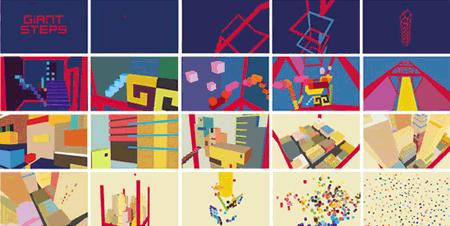
Giant Steps Animatie
Michal Levy animatie bij Giant Steps 1959

Deze 3D visualisering van Coltrane’s sheets of sounds (Giant Steps) gemaakt door Michal Levy doet Mondriaan’s Broadway Boogie Woogie verbleken.

bluenote.nl | Michal Levy | meer John Coltrane op deze blog