mijn goede voornemen voor het oude jaar:
elke dag minstens één uur luisteren naar de top 2000
elke dag minstens één uur luisteren naar de top 2000
07.00 – 08.00
1882 Charles Aznavour – For me…formidable (1963)
1881 Julien Clerc – Venise (Elle voulait qu’on l’appelle) (1976)
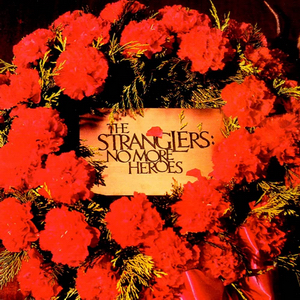
1880 Paul McCartney – Hope of deliverance (1993)de Stranglers op 1879
met No more heroes (1978)1879 Stranglers – No more heroes (1978)
1878 K.T. Tunstall – Black horse and the cherry tree (2005)
1877 Rolling Stones – Heart of stone (1965)
1876 Sutherland Brothers & Quiver – Arms of Mary (1976)
1875 Roger Daltrey – Without your love (1981)
1874 Robert Palmer – Can we still be friends (1979)
1873 Tammy Wynette – Stand by your man (1975)
1872 Oleta Adams – Get here (1990)
1871 Mama’s & Papa’s – Twelve thirty (1967)
1870 Muddy Waters – Mannish boy (1988)
1869 Rob de Nijs – Jan Klaasen de trompetter (1973)
1868 Level 42 – Lessons in love (1986)
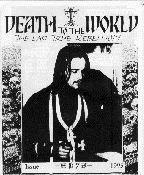 Ik vond en vind punk negatief: een agressief middel om de bloemen en de vlinders van de hippies mee af te bijten. Onder de kleurrijke en zoete voorstellingen van de flowerpower kwamen donkere, rauwe beelden tevoorschijn die volgens de punks meer met de werkelijkheid te maken hadden dan de roze wolk van de hippies. In zekere zin hebben ze gelijk: Onze wereld is in verval al vegen we dat het liefst onder het vloerkleed. Maar in tijden van crisis of oorlog wordt het duidelijk: we gaan tenonder en niet eens zo langzaam.
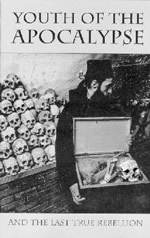 As Frederica Mathewes-Green reports in Regeneration Quarterly (Winter 1997), Marler and two other punks-turned-monks at St Herman’s — Mother Neonilla and Father Damascene — are reaching out to disaffected teens in ways hitherto unexplored by Orthodox Christianity: a zine, alternative music, a Web site, and a chain of coffeehouses. The zine, Death to the World, has reached more than 50,000 readers, mostly punks who “feel out of place in this world,”says Father Damascene. “We try to open up to them the beauty of God’s creation,” he adds, “and invite them to put to death ‘the passions,’ which is what we mean by ‘the world.’. . . Selfish passions can then be redirected into love for God.” What’s most remarkable about these monks is that they’re tapping the heart of contemporary youth culture even though they have little or no contact with its commercial manifestations. Two of the St. Herman Brotherhood’s three California monasteries have no electricity, phones, or running water. And Father John lives in a monastery on an island off Alaska and communicates only by mail.