In dezelfde weken van 1967 toen The Beatles in de Abbey Road Studios bezig waren met de opnamen voor Sgt. Pepper’s waren net om de hoek de heren van Pink Floyd bezig met het opnemen van hun debuutalbum The Piper at the Gates of Dawn. Veertig jaar na dato luisterde ik vandaag weer eens naar dit curieuze album, dat bijna helemaal gevuld is met composities van Syd Barrett en eigenlijk revolutionairder is dan Sgt. Pepper’s. Ik werd vooral getroffen door het debuutnummer van Rogers Waters : Take up thy Stethoscope and walk. Een compositie die onmiddellijk laat horen waarom 1967 zo’n bijzonder jaar was. In 1967 gingen namelijk alle remmen los. Onder invloed van LSD koos men voor de hoogste versnelling en manische grenzeloosheid.
 Ik moest denken aan de cover van Mojo Magazine Special over the Summer of Love dat ik afgelopen week kocht. Daarop staan degenen die moedwillig gierend uit de bocht vlogen: Jimmy Hendrix, Janis Joplin, Jim Morrisson, Brian Jones en eigenlijk ook Syd Barrett. Ze overleefden 1967 nog geen vier jaar en stierven voor hun dertigste. Ook al stierf het brein achter The Piper at the Gates of Dawn pas een jaar geleden, geestelijk belandde hij in 1968 al in Neverland en was zijn brein deleted.
This was Roger Waters’ debut song-writing credit, continually building in speed until the end and featuring frantic guitar-work by Syd Barrett and maniac keyboard parts by Rick Wright. The song’s title is a reference to John 5:8 – “Jesus saith unto him, Rise, take up thy bed, and walk.” Its morbid lyrics are quite unlike anything else on the album, the rest of which was penned by Barrett, but is characteristic of much of Waters’s work; the clinical motif would recur in compositions like “Free Four” and “Comfortably Numb.” Similarly, in Sheep, we find more Biblical adapted by Waters to fit the song.
Bron: en.wikipedia.org
Maandag a.s. verschijnt de 40th Anniversary Edition van The Piper at the Gates of Dawn.
 Ik kocht vanmorgen een speciale uitgave van
  During the summer of 1966 the Beatles played their last live concert at San Francisco’s Candlestick Park. After a short break, they spent the next six months in the recording studio working on “Sgt. Pepper’s Lonely Hearts Club Band,“ their eighth studio album. After the record’s release on June 1, 1967 they took another short break during the so-called “Summer of Love.“ George and his wife Patti came back to San Francisco on Aug. 8, 1967, and visited the Haight. They had traveled from England to Los Angeles the week before, renting a house on Blue Jay Way, which gave Harrison an idea for the tune of the same name. George traveled north to San Francisco, telling reporters that he was simply curious about the hippie phenomenon. George, Patti, and Beatles press agent, Derek Taylor, drove into the area in the early evening and strolled, unnoticed, along Haight Street.
 They reached the sector of Golden Gate Park, then known as “Hippie Hill,” where they found a young man performing before a gathering of about 20 long-haired youths. After a few minutes, Harrison asked to borrow the musician’s guitar, and proceeded to play. After a few moments he was recognized and a sizable crowd formed. He stopped in a park to play a few bars of “Baby, You’re a Rich Man” for the hippies. After a few minutes Harrison shouted “Let’s go for a walk.“ As he walked and strummed the guitar the hippies followed along. As the crowd left the park and moved down Haight, it grew. When asked how he liked the Haight, he answered “Wow, if it’s all like this, it’s too much.“
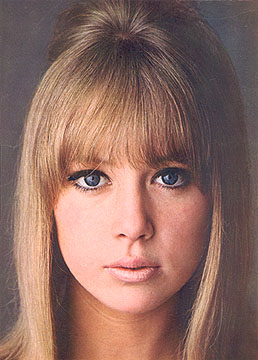 Pattie Boyd