door Ghigo Roli (fotografie) en Giorgio Bonsanti (tekst)
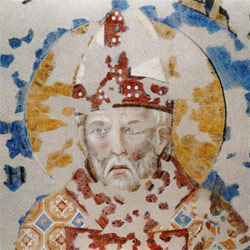 De Italiaanse fotograaf Ghigo Roli werkte in 1997 aan een complete inventarisering van de wereldberoemde fresco’s van Giotto in de dertiende eeuwse basiliek van de heilige Francisus in Assisi. Maandenlang was hij bezig geweest met detailopnamen die hij o.a. voor een boek zou gaan gebruiken. In de nacht van 26 september 1997 maakte hij de laatste opnamen. Toen hij even naar buiten was gegaan, begon de aarde te plotseling te schudden en kort daarop stortte een deel van het eeuwenoude gewelf met donderend geraas naar beneden. [ zie filmopname ] Na de grote schok rende Roli naar binnen om zijn camera te redden. De schade was enorm. Tweehonderd vierkante meter van het gewelf was beschadigd en na eindeloos gepuzzel zouden resterende fragmenten van de gewelfschilderingen precies vijf jaar later weer op hun oorspronkelijke plaats zijn gebracht. De Italiaanse kunsthistoricus Giorgio Bonsanti schreef de tekst bij de unieke foto’s vlak voor en na deze kunsthistorische ramp.
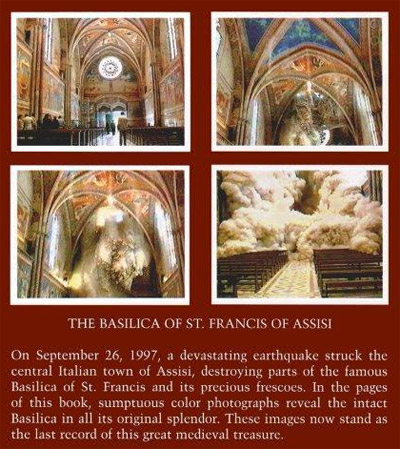
After several seismic tremors in Umbria and the Marche in the preceding days, the strongest earthquake occurred on the morning of September 26, 1997. The earthquake not only tragically killed four people, but also caused severe damage and destruction in the upper church of San Francesco. Serious static damage was found in the walls and the vault. The morning earthquake destroyed around 200 square metres of vault frescoes. In the front bay arch above the entrance, four of the eight pairs of saints by Giotto were affected, and in the adjoining vault of the Doctors of the Church, the field containing St. Hieronymus, also a work by Giotto and his workers, collapsed and left a huge hole in the first bay. In contrast, the vault of the second bay and the vault of the third bay, containing the large deesis portraying Christ as the redeemer together with the advocates Mary and John on either side of St. Francis, remained intact. However, the western part of the fourth bay with a starry sky and the adjoining evangelists„ vault with frescoes by Cimabue above the cross-vault collapsed. The field containing St. Matthew was almost completely destroyed.
Bron: expo.khi.fi.it
met de fresco’s van Giotto
interview met Padre Ruf tien jaar na de aardbeving | de basilica van Assisi
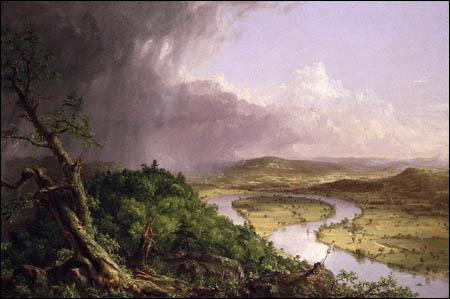
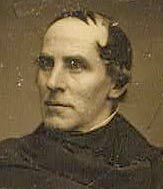 Thomas Cole was born in 1801 at Bolton, Lancashire in Northwestern England and emigrated with his family to the United States in 1818. During the early years Cole lived for short periods in Philadelphia, Ohio, and Pittsburgh where he worked as an itinerant portrait artist. Although primarily self-taught, Cole worked with members of the Philadelphia Academy, and his canvases were included in the Academy’s exhibitions. In 1825, Cole discovered the haunting beauty of the Catskill wilderness. His exhibition of small paintings of Catskill landscapes came to the attention of prominent figures on the New York City art scene including Asher B. Durand, who became a life-long friend, and his fame spread. While he was still in his twenties, Cole was made a fellow of the National Academy.
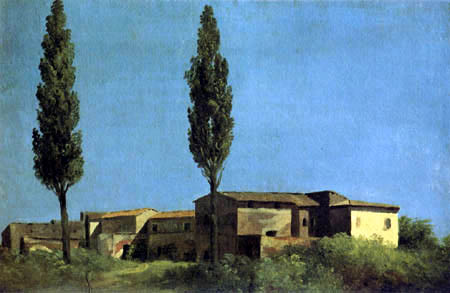
 De Prix de Rome vindt zijn fundament bijna 350 jaar geleden in Frankrijk. Vanaf het begin van de zestiende eeuw geldt de klassieke oudheid als bakermat van de Europese kunst. Voor de meeste Noordeuropese kunstenaars ontbreken dan echter de mogelijkheden om het klassieke Rome te bezoeken. Een enkeling durft de (voet-)tocht over de Alpen wel te maken. En komt terug met verhalen, prenten en een enkele keer met een klein schilderij met een klassiek, mythologisch onderwerp of een landschap uit de omgeving van Rome. Koning Lodewijk XIV besluit dat Franse kunstenaars de klassieken met eigen ogen moeten kunnen bekijken en bestuderen. De door hem opgerichte „Académie Royale de Peinture et de Sculpture„ stelt daartoe in 1666 de Prix de Rome in. De prijs is een vorstelijk geldbedrag (stipendium) waarmee de winnaar maar liefst vier jaar in Rome kan werken: aan de „Académie de France„ die dan is gevestigd in de Villa Medici. Temidden van de klassieke omgeving van het Oude Rome.