vandaag is het in de Orthodoxe Kerk Vergevingszondag
en morgen begint de heilige Veertigdagentijd, de Grote Vasten
en morgen begint de heilige Veertigdagentijd, de Grote Vasten
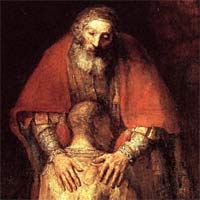 Lent is the liberation of our enslavement to sin, from the prison of “this world”. And the Gospel lesson of this last Sunday (Matt. 6:14-21) sets the conditions for that liberation. The first one is fasting - the refusal to accept the desires and urges of our fallen nature as normal, the effort to free ourselves from the dictatorship of flesh and matter over the spirit. To be effective, however, our fast must not be hypocritical, a “showing off”. We must “appear not unto men to fast but to our Father who is in secret.”
The second condition is forgiveness - “If you forgive men their trespasses, your Heavenly Father will also forgive you.” The triumph of sin, the main sign of its rule over the world, is dicvision, opposition, separation, hatred. Therefore, the first break through this fortress of sin is forgiveness: the return to unity, solidarity, love. To forgive is to put between me and my “enemy” the radiant forgiveness of God Himself. To forgive is to reject the hopeless “dead-ends” of human relations and to refer them to Christ. Forgiveness is truly a “breakthrough” of the Kingdom into this sinful and fallen world.
uit: Father Alexander Schmemann, Great Lent – Journey to Pascha, blz. 28
To forgive is to put between me and my “enemy” the radiant forgiveness of God Himself. To forgive is to reject the hopeless “dead-ends” of human relations and to refer them to Christ. Forgiveness is truly a “breakthrough” of the Kingdom into this sinful and fallen world.
Father Alexander Schmemann
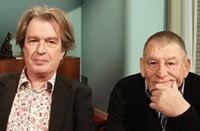 Bernlef: Er zijn twee concepten waarmee we ons door het leven slaan. Het ene is onze positie in de ruimte en het andere is onze positie in de tijd. Tijd en ruimte. Als die concepten worden aangetast, dan leef je in een eeuwig bedreigend heden. Elke handeling die je moet doen, is nieuw, onbekend. Dat is… ik bedoel… dit boek (Hersenschimmen) is maar een vage afspiegeling van hoe érg het is, hoe érg het moet zijn.
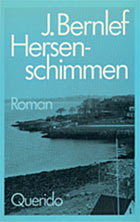 De onvermijdelijke vraag aan de schrijver, die inmiddels in de zeventig is, luidt of hij zélf niet bang begint te worden voor het vertroebelen van zijn eigen geest. Bernlef: “Mijn geheugen voor dingen in de tijd is slechter geworden: wanneer iets precies is gebeurd, weet ik soms niet meer. Het gekke met herinneringen is dat je je totaal onbelangrijke dingen vaak het helderst herinnert. Zo zie ik zo voor me hoe mijn moeder in een bepaalde lichtval een brood staat te snijden. Maar vraag me niet naar mijn eerste verliefdheid. Mensen zeggen weleens: „Wacht maar tot je ouder wordt, dan komen al je jeugdherinneringen weer haarscherp terug. Maar ik ben nu 73, en ik zit nog te wachten.” (
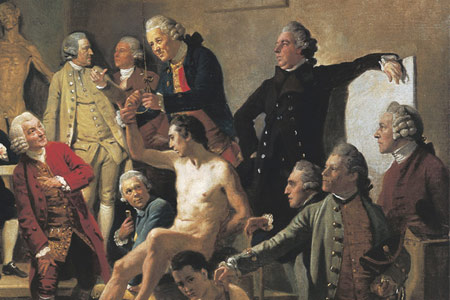
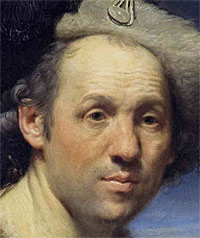 Tot voor kort had ik het vooroordeel dat de schilderkunst van de achttiende eeuw nauwelijks de moeite waard was. Alles was in de zeventiende eeuw al gedaan en in het laatste kwart van die eeuw kwamen die vreselijke pruiken al en werd de schilderkunst even poezelig als de mannen verwijfd. Mea culpa voor dit verschrikkelijke vooroordeel! Om boete te doen, heb ik mij de laatste tijd op de schilderkunst van de achttiende eeuw gestort, met name op portretten.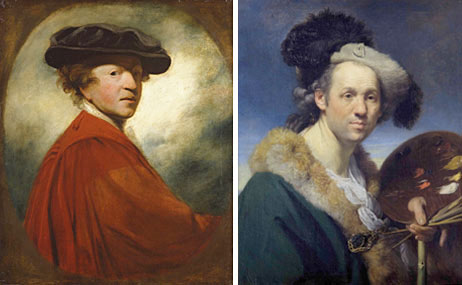
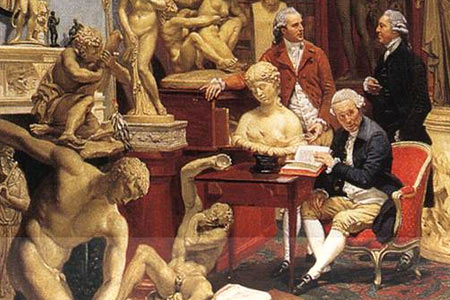
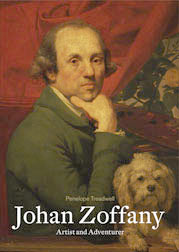 From early apprenticeships in Ellwangen and Regensburg, studying under Martin Speer, and Rome where he fell under the spell of Piranesi, Zoffany moved to London, finding work painting pastoral vignettes for the clockmaker Stephen Rimbault. From there he joined the studio of Benjamin Wilson whose passion for the theatre opened the door to London’s leading thespian, David Garrick. Under Garrick’s patronage, Zoffany popularised and perfected the art of the theatrical „conversation piece„ which captured the actor on stage in character, thereby acting as his publicist and provider of prints for his doting fans.