volg de meester [ 91 ]

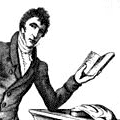
portret van Epes Sargent (ca. 1760)
door John Singleton Copley (1738-1815)
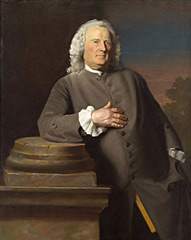
Epes SargentOp 9 september was het 200 jaar geleden dat John Singleton Copley stierf. Samen met Benjamin West wordt hij gezien als de grootste schilder die het koloniale Amerika heeft voortgebracht. Deze week begon ik aan een kopie van een detail uit een portret dat hij rond zijn twintigste schilderde van Epes Sargent (1690-1762), een grootgrondbezitter uit Massachusetts. Het hangt tegenwoordig in de National Gallery of Art in Washington D.C.. Copley‘s portretten zijn overigens uitstekend vertegenwoordigd in het Google Art Project.

Copley‘s art matured quickly, as evidenced in this forthright portrayal of Epes Sargent. As proprietor of almost half the land in Gloucester, Massachusetts, the sitter confidently sticks one hand in a pocket and leans on a sturdy column base that forms a traditional emblem of Fortitude. Copley candidly noted such factual details as the mole under Sargent’s left eye and the powder fallen onto his shoulder from his wig. (Bron: nga.gov)
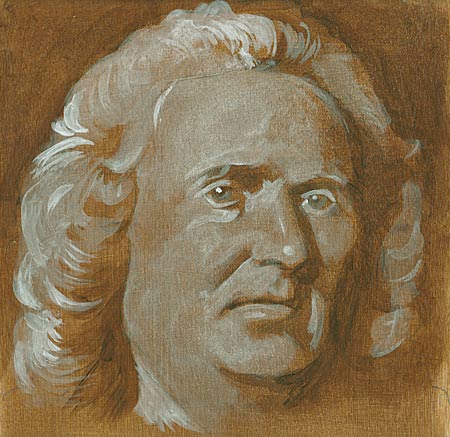
John Singleton Copley
toonschildering in tempera als basis
voor een olieverfportret.

volg de meester [ 1-91 ] | van oude meesters en dingen die niet voorbijgaan
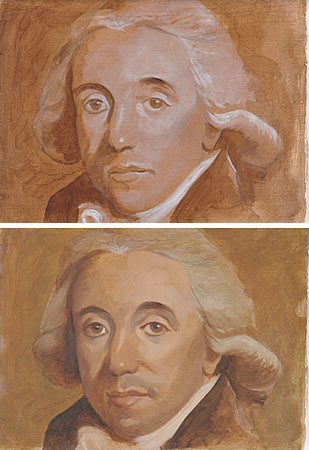
The making of America

zondag opnieuw gezien op BBC2: How the West was won (1962)

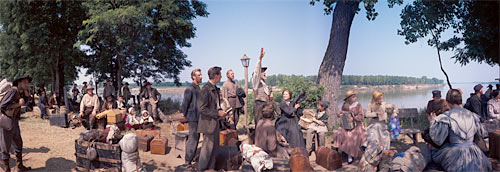
In december 2013 zag ik voor de eerste maal deze patriottische film uit 1962. How the West was won werd opgenomen in cinerama, dat wil zeggen dat er simultaan met drie camera’s gefilmd werd. De drie beelden werden achteraf aaneengesmeed en geprojecteerd op een langwerpig hol scherm.

How the West was won
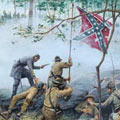
panoramisch beeld uit How the West was won

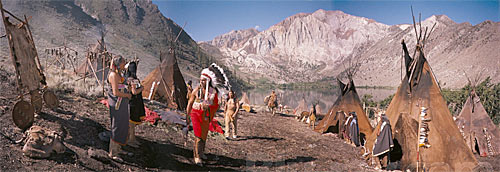
Op televisie ziet cinerama er vreemd uit: een langgerekt beeld waarbij de compositie telkens opgebouwd is vanuit een drieluik. De handeling vindt meestal in het midden plaats en echte close ups komen in het geheel niet voor. Daardoor blijven de personages wat op afstand. Maar de panorama’s zijn indrukwekkend. How the West was won kun je zien als een nazaat van de Hudson River School met zijn uitgestrekte panorama’s van de Amerikaanse wildernis.

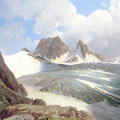
How the West was won
panoramisch beeld dat mij doet denken aan de landschapsschilderijen van Albert Bierstadt.

Dit is God’s own country. De gezwollen voice over van Spencer Tracy vult het pathos perfect aan: “This land has a name today, and is marked on maps. But, the names and the marks and the maps all had to be won, won from nature and from primitive man.”

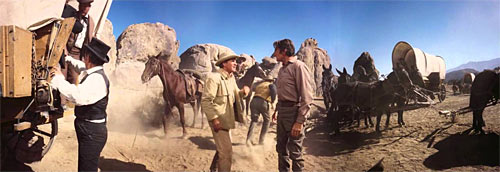
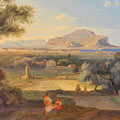
How the West was won
de composities zijn opgebouwd vanuit een drieluik, die niet altijd één beeld vormen.
This land has a name today, and is marked on maps. But, the names and the marks and the maps all had to be won, won from nature and from primitive man.
The west was won by its pioneers, settlers, adventurers is long gone now. Yet it is theirs forever, for they left tracks in history that will never be eroded by wind or rain – never plowed under by tractors, never buried in compost of events. Out of the hard simplicity of their lives, out of their vitality, of their hopes and sorrows grew legends of courage and pride to inspire their children and their children’s children. From soil enriched by their blood, out of their fever to explore and be, came lakes where once there were burning deserts – came the goods of the earth; mine and wheat fields, orchards and great lumber mills. All the sinews of a growing country. Out of their rude settlements, their trading posts came cities to rank among the great ones of the world. All the heritage of a people free to dream, free to act, free to mold their own destiny.
 
Bron: imdb.com

How the West was won [ imdb.com ]