Vierde Zondag van de Grote Vasten
Deze zondag vieren we de nagedachtenis van de Heilige Johannes, auteur van de “Ladder”. Dit fantastisch werk wordt zo genoemd, omdat het gaat over de ladder van de deugden : van de kleinste tot de grootste. De namiddag van de woensdag die volgt wordt de “Grote Kanon” gezongen, nl. een prachtige reeks hymnen geschreven door de Heilige Andreas van Kreta.

Saint John Climacus was probably born in the second half of the sixth century; but his country and origins are alike unknown because, from the beginning of his renunciation of the world, he took great care to live as a stranger upon earth. “Exile,“ he wrote, “is a separation from everything, in order that one may hold on totally to God.“ We only know that, from the age of sixteen, after having received a solid intellectual formation, he renounced all the pleasures of this vain life for love of God and went to Mount Sinai, to the foot of the holy mountain on which God had in former times revealed His glory to Moses, and consecrated himself to the Lord with a burning heart as a sweet-smelling sacrifice.
Setting aside, from the moment of his entry into the stadium, all self-trust and self-satisfaction through unfeigned humility, he submitted body and soul to an elder called Martyrios and set himself, free from all care, to climb that spiritual ladder (klimax) at the top of which God stands, and to “add fire each day to fire, fervour to fervour, zeal to zeal.“ He saw his shepherd as “the image of Christ“ and, convinced that his elder was responsible for him before God, he had only one care: to reject his own will and “with all deliberateness to put aside the capacity to make [his] own judgement,“ so that no interval passed between Martyrios„ commands, even those that appeared unjustified, and the obedience of his disciple. In spite of this perfect submission, Martyrios kept him as a novice for four years and only tonsured him when he was twenty, after having tested his humility. Strategios, one of the monks present at the tonsure predicted that the new monk would one day become one of the great lights of the world. When, later, Martyrios and his disciple paid a visit to John the Savaite, one of the most famous ascetics of the time, the latter, ignoring the elder, poured water over John’s feet. After they had left, John the Savaite declared that he did not know the young monk but, under the inspiration of the Holy Spirit, he had washed the feet of the Abbot of Sinai. The same prophecy was confirmed by the great Anastasios the Sinaite (April 21), whom they also went to visit.
Bron: goarch.org
Setting aside, from the moment of his entry into the stadium, all self-trust and self-satisfaction through unfeigned humility, he submitted body and soul to an elder called Martyrios and set himself, free from all care, to climb that spiritual ladder (klimax) at the top of which God stands, and to “add fire each day to fire, fervour to fervour, zeal to zeal.“ He saw his shepherd as “the image of Christ“ and, convinced that his elder was responsible for him before God, he had only one care: to reject his own will and “with all deliberateness to put aside the capacity to make [his] own judgement,“ so that no interval passed between Martyrios„ commands, even those that appeared unjustified, and the obedience of his disciple. In spite of this perfect submission, Martyrios kept him as a novice for four years and only tonsured him when he was twenty, after having tested his humility. Strategios, one of the monks present at the tonsure predicted that the new monk would one day become one of the great lights of the world. When, later, Martyrios and his disciple paid a visit to John the Savaite, one of the most famous ascetics of the time, the latter, ignoring the elder, poured water over John’s feet. After they had left, John the Savaite declared that he did not know the young monk but, under the inspiration of the Holy Spirit, he had washed the feet of the Abbot of Sinai. The same prophecy was confirmed by the great Anastasios the Sinaite (April 21), whom they also went to visit.
Bron: goarch.org
Luister naar de hymnen die vandaag gezongen worden.
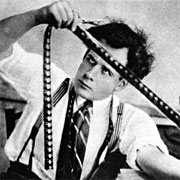 A master of the early Soviet cinema, Eisenstein was responsible for a group of imaginative and exciting silent films employing rapid, rhythmic montage and a feverish visual invention. Once universally acclaimed, Eisenstein’s reputation has suffered in recent years, with many finding his propaganda too strident, but Strike and Battleship Potemkin, at least, remain films of extraordinary energy and power. Eisenstein’s later career was inhibited by ill health and his work suffered official disapproval under Stalinism, but his last film, Ivan The Terrible, remains a decadent masterpiece brimming with grotesque invention.