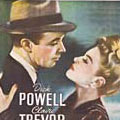
gekeken naar Touch of Evil (1958) en Psycho (1960)
Wanneer je deze twee meesterwerken van Orson Welles en Alfred Hitchcock na elkaar bekijkt, vallen onmiddellijk de overeenkomsten op: Beide films zijn in zwart-wit geschoten en spelen zich af in het Zuiden van de Verenigde Staten (respectievelijk een Amerikaans-Mexicaans grensstadje en Phoenix, Arizona), in beide films speelt Janet Leigh en in beide films overnacht ze in een obscuur motel. Tenminste, in Psycho is dat haar intentie…
Janet Leigh in Touch of Evil (1958) en Psycho (1960), tweemaal in een motel
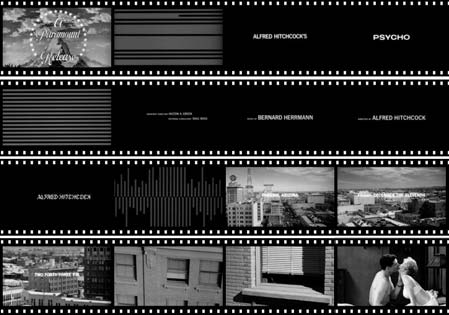
In het artikel A Touch of Psycho worden deze overeenkomsten besproken. Het motel uit Touch of Evil moet thrillerauteur Robert Bloch geïnspireerd hebben voor zijn suspense novel Psycho (1959). Maar niet alleen in thematiek, ook in de cinematografie vinden we overeenkomsten. Hitchcock begint Psycho met een knipoog naar de beroemde openingsshot uit Touch of Evil:
The next time you watch the beginning of
Psycho, as the camera slowly moves from a distant view of the cityscape of
Phoenix into a close-up of the hotel room window, consider another even more famous film opening the dazzling crane and dolly shot that encompasses the first three minutes of
Orson Welles’ Touch of Evil, made in 1958, just two years before
Psycho. That shot, which travels several hundred yards across much of a town as we wait for the ticking bomb to explode, is so audacious that even today films like
The Player explicitly refer to it.
Bron:
brightlightsfilm.combij de intro van
Psycho hoor je
Bernard Herrmann‘s disharmoniërende strijkers de geest doormidden zagen. ©
Universal StudiosA black and white film
requires the simplicity
of a black and white score
Bernard Herrmann
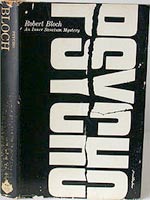
The Southwestern locales of the two films are another similarity, particularly the isolated, deserted motel settings. Dingy motels were, of course, common settings in the film noirs that were the main inspiration for the films’ look. But the motels create an especially powerful atmosphere of dread and alienation in these two films, perhaps because they seem to exist in a dreamscape, disconnected from the rest of the “normal” world. The use of the sordid motel as an instrument of psychological torture and an emblem of decay in
Touch of Evil may have inspired
Robert Bloch, who wrote the novel that
Psycho is based on, to use a motel to capture an American environment suitable as a breeding ground for psychosis and random violence. His novel, based on the notorious 1957 case of
Ed Gein, a reclusive
Wisconsin farmer and mass murderer, was published in 1959, a year after
Touch of Evil was released.
Bron:
brightlightsfilm.comYou know what I think? I think that we’re all in our private traps, clamped in them, and none of us can ever get out. We scratch and we claw, but only at the air, only at each other, and for all of it, we never budge an inch.
Norman Bates in Psycho
A Touch of Psycho | Psycho in 1000 stills [ hitchcockwiki.com ]
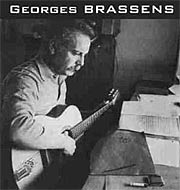 De zwaarbesnorde meester van het Franse chanson overleed op 29 oktober 1981, een week na zijn zestigste verjaardag. Ik besloot hem te gedenken met het draaien van zijn muziek. Terugblikkend was het ook het vieren van mijn prille adolescentie. Terwijl ik nog met één been stevig in de muziek stond waar een gemiddelde achttienjarige in 1981 naar luisterde, The Police, Supertramp, Ultravox en David Bowie, had ik mijn andere been in een nieuwe wereld geplaatst. Tegelijkertijd was dat ook een heel oude wereld, de wereld van de troubadour. Brassens is beslist geen vocale hoogvlieger, eerder declameert hij gedichten terwijl hij zichzelf begeleidt op gitaar.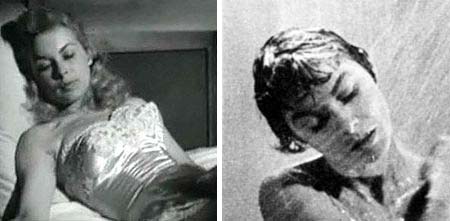
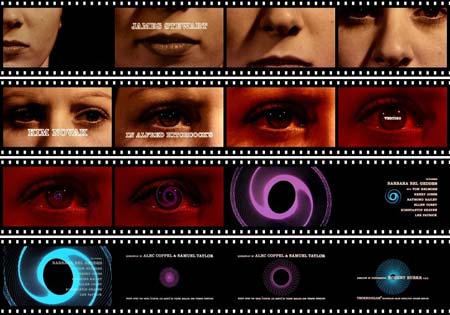
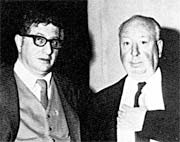 De scores van Vertigo (1958) en Psycho (1960) laten het genie van de filmcomponist Bernard Herrmann horen. Een halve eeuw later klinkt zijn filmmuziek ons vertrouwd in de oren omdat ze sindsdien vaak geïmiteerd is, vooral in thrillers. Maar Herrmann was toch echt de eerste. Dat zijn scores precies het hart van de emotie raken, komt zeker ook door zijn vruchtbare samenwerking met Alfred Hitchcock. De master of suspense wist hoe hij moest doordringen tot de kern en Herrmann voelde muzikaal precies aan waar Hitchcock naartoe wilde. Aan hun samenwerking kwam in 1966 abrupt een einde nadat Hitchcock zijn score voor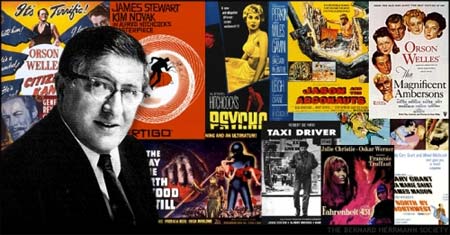
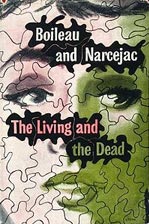 In 1958 Alfred Hitchcock created his masterpiece, Vertigo. Based upon the novel d’ Entre les Morts (The Living and the Dead) by Pierre Boileau and Thomas Narcejac Vertigo was, itself, a modern variation of the Tristan myth upon which Richard Wagner based his opera, Tristan and Isolde. A story of love, obsession and enduring passion for a woman obscuring the fragile boundaries separating life and death, Vertigo became the perfect culmination not only of Alfred Hitchcock‘s filmic fears and vulnerability, but of Bernard Herrmann‘s, as well.