tentoonstelling over Nicolaes Berchem (1621/22 – 1683)
in het Frans Hals Museum Haarlem tot 15 april 2007
in het Frans Hals Museum Haarlem tot 15 april 2007
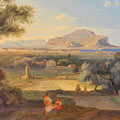
Het oeuvre van Nicolaes Berchem (1621/22 – 1683) valt niet alleen op door de grote verscheidenheid aan thema’s en stijlen, maar ook door de enorme omvang: meer dan 800 schilderijen zijn aan hem toegeschreven. Berchem was ook een begenadigd tekenaar. Zijn figuurstudies behoren tot de fraaiste uit de zeventiende eeuw. Hij schilderde de figuren in landschappen van Jacob van Ruisdael, Willem Schellinks en Jan Hackaert en hij werkte samen met Gerrit Dou, Jan Wils en Jan Baptist Weenix. Bovendien vervaardigde hij meer dan vijftig etsen, voornamelijk met voorstellingen van dieren. Berchem heeft talrijke leerlingen gehad: Karel Dujardin, Willem Romeyn, Hendrick Mommers, Dirck Maes, maar ook de genreschilders Pieter de Hooch en Jacob Ochtervelt. Hoewel er geen bewijs is dat hij ooit zelf in Italiëis geweest, werd hij in de achttiende eeuw door de vele gravures en etsen naar zijn werk de bekendste Nederlandse Italianisant. Nicolaes Berchem wist als geen ander feilloos op de vraag van de markt in te spelen. Hij werd één van de meest geliefde en best betaalde kunstenaars van zijn tijd, die talrijke kunstenaars heeft beïnvloed.

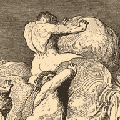
Nicolaes Berchem schilderde ook de onmogelijke liefde tussen Jupiter en Callisto
De tentoonstelling zal bestaan uit ca. veertig schilderijen, twintig tekeningen en ca. twintig etsen. De werken komen uit openbare en particuliere verzamelingen in de Verenigde Staten en Europa, zoals uit de Royal Collection, Her Majesty Queen Elisabeth II in Londen, de Alte Pinakothek in München en het Louvre in Parijs.
Bron: claesberchem.com
Bron: claesberchem.com

 “(Her)kent u die uitdrukking? Of zoals sommige mensen wel eens zeggen… Ik moest daaraan denken toen…” zo begon ds. Gremdaat altijd zijn fijne televisiecolumn waarbij hij ons moed insprak. Ik moest weer eens aan hem denken, toen ik in de krant bovenstaande oneliner las. Typisch een uitdrukking uit het therapeutische circuit waarbij ik dan onmiddellijk moet denken aan die vriesbox met ingevroren hart die ik wel eens zag in een documentaire over harttransplantatie. Tranen ontdooien het ingevroren hart, maken weer warmbloedig en levend. Hete tranen zorgen voor het beste resultaat.
 There are tears that burn and there are tears that anoint as if with oil. All tears that flow out of contrition and an anguish of heart on account of sins dry up and burn the body, and often even the governing faculty feels the injury caused by their outflow. At first a man must necessarily come to this order of tears and through them a door is opened unto him to enter into the second order, which is superior to the first; this is the sign that a man has received mercy. These are the tears that are shed because of insight; they make the body comely and anoint it as if with oil, and they pour forth by themselves without compulsion… The body receives from them a sort of nourishment, and gladness is imprinted upon the face. He who has had experience of these two alterations will understand.